On this page
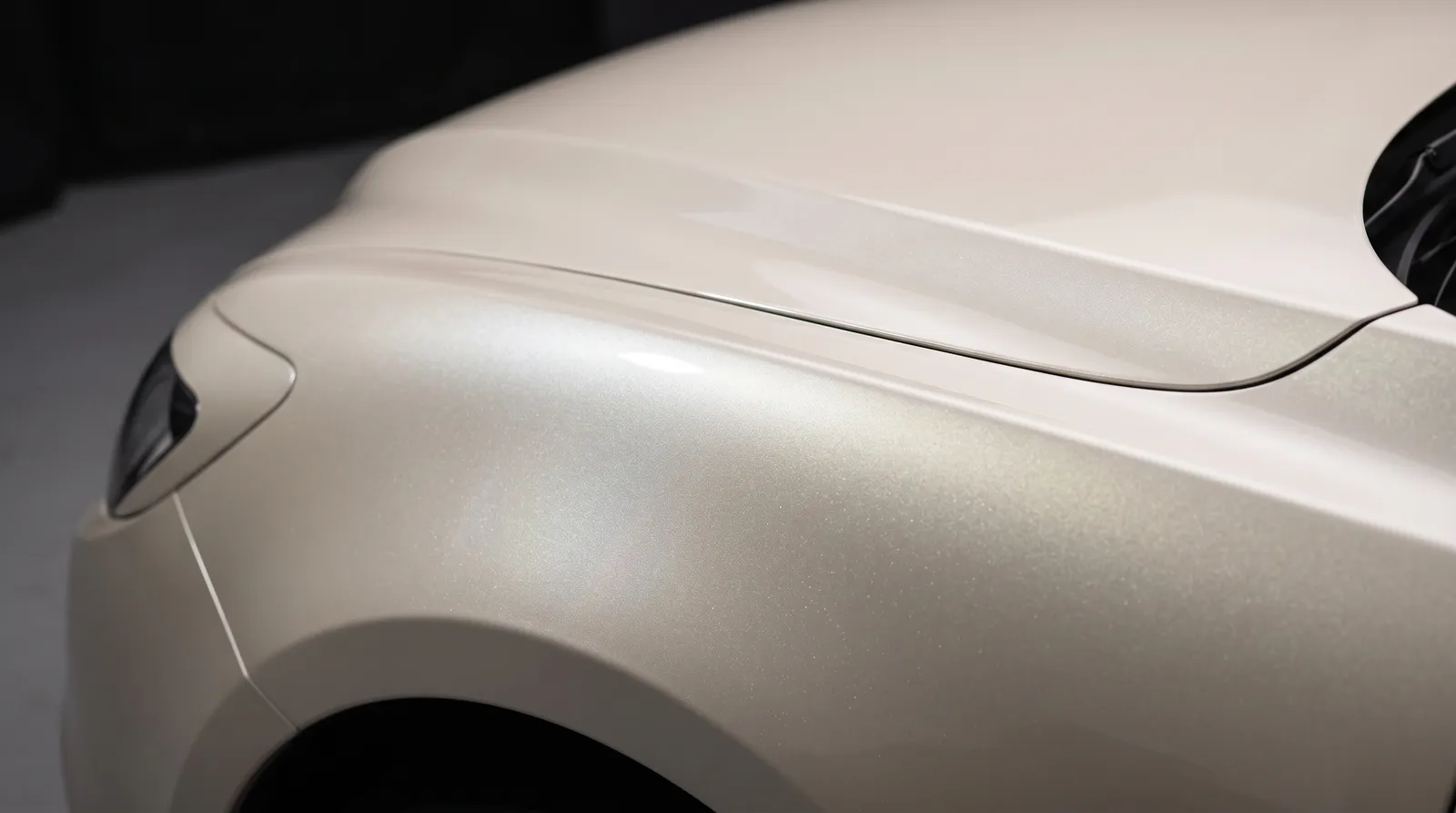
Pearl is a finish category built around mica or pearlescent particles suspended in a translucent coat over a base color, and it can be applied to nearly any base hue, not just white. What defines "pearl" as a finish isn't a specific color but a specific optical effect — a soft, shifting luminosity that flat pigment alone can't produce.
It sits between a standard metallic (which uses reflective metal flake) and a candy finish (which uses tinted transparent layers) in terms of both visual character and application complexity, offering a distinct middle ground of understated shimmer.
It's also worth thinking about this finish in the context of the whole vehicle rather than in isolation — the same finish can read completely differently on a small coupe versus a full-size truck, simply because of how much surface area is available to show off its particular light behavior. Seeing it applied to a similar body style, not just any vehicle, gives a much more accurate sense of how it will look on your own.
Where Pearl Came From
Pearlescent pigments were originally developed from natural fish-scale extracts before synthetic mica-based alternatives made the effect commercially practical and affordable enough for broad automotive use starting in the latter half of the 20th century. Pearl has since become a standard premium finish option across most manufacturers' lineups.
How Pearl Is Applied
A pearl finish starts with a solid base coat in whatever hue is desired, followed by one or more coats containing pearlescent mica particles, and finished with clear coats for protection and gloss. The base color underneath significantly affects the final look — the same pearl coat over a dark base reads very differently than over a light one.
As with pearl white specifically, even application across large panels takes real skill, since the pearl effect shows unevenness more readily under direct light than a flat solid color would.
Ambient conditions during application matter more than most owners realize — temperature, humidity, and even airflow in the booth all affect how evenly a coat lays down and how consistently it cures. This is part of why the same finish can look subtly different between two shops, or even between two jobs at the same shop on different days, and why asking to see recent examples of a painter's work in this specific finish is worth doing before committing.
What Pearl Looks Like in Different Light
Pearl finishes are defined by how they respond to light — subtle in flat or overcast conditions, and noticeably more luminous and dimensional under direct sun or bright artificial lighting. This shifting quality is the core appeal over a flat solid color.
It's worth checking how this finish reads under artificial lighting too, since showroom halogen or LED lighting, streetlights at night, and your own garage's bulbs can each cast a slightly different color temperature that changes how the finish presents compared to natural daylight. Viewing a physical sample under your own everyday lighting, not just in a showroom, gives the most accurate preview.
Caring for a Pearl Finish
Pearl finishes require similar care to a standard metallic — regular washing, careful drying to avoid water spots, and gentle polishing technique that won't wear through the thin pearl layer unevenly.
A simple, consistent routine matters more than any single specialized product: rinse loose dirt before touching the surface to avoid grinding grit into the finish, wash with a dedicated car-wash soap rather than household detergent, and dry with a clean microfiber towel instead of letting water air-dry and spot. Whatever protective product you use, confirm it's specifically rated for this finish type before applying it broadly — a product formulated for gloss can behave very differently on matte or satin.
Pearl vs. Other Finishes
Compared to metallic, pearl gives a softer, more luminous shimmer rather than metallic's more directional sparkle. Compared to candy, pearl is generally less dramatic and less expensive to apply, offering a more subtle upgrade over a solid color rather than candy's deep, built-up richness.
If you're genuinely undecided between two finish types, viewing physical samples side by side in direct sunlight is far more reliable than comparing photos or descriptions — texture and light response are two of the hardest qualities to judge accurately on a screen, and the difference that looks subtle in a photo can be dramatic in person.
Cost is often the deciding factor when two finishes are otherwise equally appealing — it's worth getting quotes for both options on your specific vehicle before committing, since the price gap between finish types can vary more than expected depending on your shop's specific material costs and experience with each technique.
How Long Pearl Lasts
A properly applied and cleared pearl finish holds up as well as any quality automotive paint job. Its main long-term consideration is the same UV exposure concern any finish faces — regular protection helps preserve the pearl layer's shimmer over many years.
Real-world durability also depends heavily on where and how the vehicle is kept — covered or garaged storage, consistent washing, and prompt attention to contaminants like bird droppings or tree sap all extend the practical lifespan of any finish's good looks, regardless of the specific type chosen.
Which Vehicles Suit Pearl Best
Pearl works well for owners who want more visual depth than a flat solid color without the cost and complexity of a full candy build. It suits nearly any vehicle type and pairs well with both understated and bold base colors.
Body style matters more than most buyers expect when choosing a finish — flowing, curved panels show off light-reactive finishes like metallic, pearl, and candy more dramatically than flat, boxy panels do, while flatter surfaces can actually suit matte and satin's more uniform, texture-forward look particularly well.
Climate is worth a moment's thought too — finishes with less UV-stable pigments or more delicate textures can ask more of an owner in consistently sunny, high-UV regions than they would in a milder climate, so it's reasonable to factor your local weather into the decision alongside pure aesthetics.
Cost Considerations
Pearl typically carries a modest premium over an equivalent solid color, reflecting the extra coat and careful application required — see our cost guide for general finish-type pricing patterns.
Beyond the finish category itself, the biggest cost factors in any project are the amount of surface prep needed, how many panels are involved, and whether trim and lighting need to be removed for clean, sprayed-in edges. It's worth getting an itemized quote so you can see exactly how much of the total cost is tied to the finish choice specifically versus general prep and labor.
Common Misconceptions About Pearl
A common misconception is that pearl and metallic are interchangeable terms — they use different physical materials (mica particles versus metal flake) and produce visibly different light effects.
Frequently Asked Questions
Can pearl be applied over any color, not just white?
Yes — pearl is an effect that can be layered over virtually any base hue, though how dramatic the shimmer reads varies depending on the base color's darkness and saturation.
Is pearl the same as metallic?
No — pearl uses mica particles for a soft, luminous shimmer, while metallic uses reflective metal flake for a more sparkly, directional glint. See our metallic finish pages for a direct comparison.
How can I tell if a car has a pearl finish just by looking at it?
Pearl finishes tend to show a soft glow or subtle color shift under direct light that solid and even standard metallic finishes don't quite replicate — viewing the panel from a few different angles in sunlight is the best test.
Does pearl cost more to repair than a solid color?
Generally yes, modestly, since matching the pearl layer's density accurately takes more care than matching a flat solid color.
Does pearl affect insurance or resale differently than a standard finish?
Finish type doesn't affect insurance rates, and its resale impact is generally minor compared to the underlying color choice and the vehicle's overall condition.
Can pearl be applied by most body shops, or does it need a specialist?
Many general body shops can handle it competently, though for more involved finishes it's worth specifically asking about the shop's experience with this finish type before committing.
How do I know if my vehicle already has pearl?
Check your factory paint or trim code, typically on a door jamb sticker, or look closely at the panel in direct sunlight for the specific texture and light behavior this finish produces.
Is pearl a good choice for a vehicle I plan to sell in a few years?
It's generally fine — finish type has a modest effect on resale compared to color choice and overall vehicle condition, though very niche or high-maintenance finishes can narrow your buyer pool slightly.
Can I mix pearl with a different finish on the same vehicle?
Yes, two-tone and multi-finish combinations (for example, a gloss body with a matte hood or roof) are increasingly common and can be planned deliberately with your painter.
Does pearl need any special preparation before a wrap can be applied over it?
If you're considering a vinyl wrap over this finish later, mention that to your painter upfront — surface texture and gloss level both affect how well a wrap adheres and how it will look.