On this page
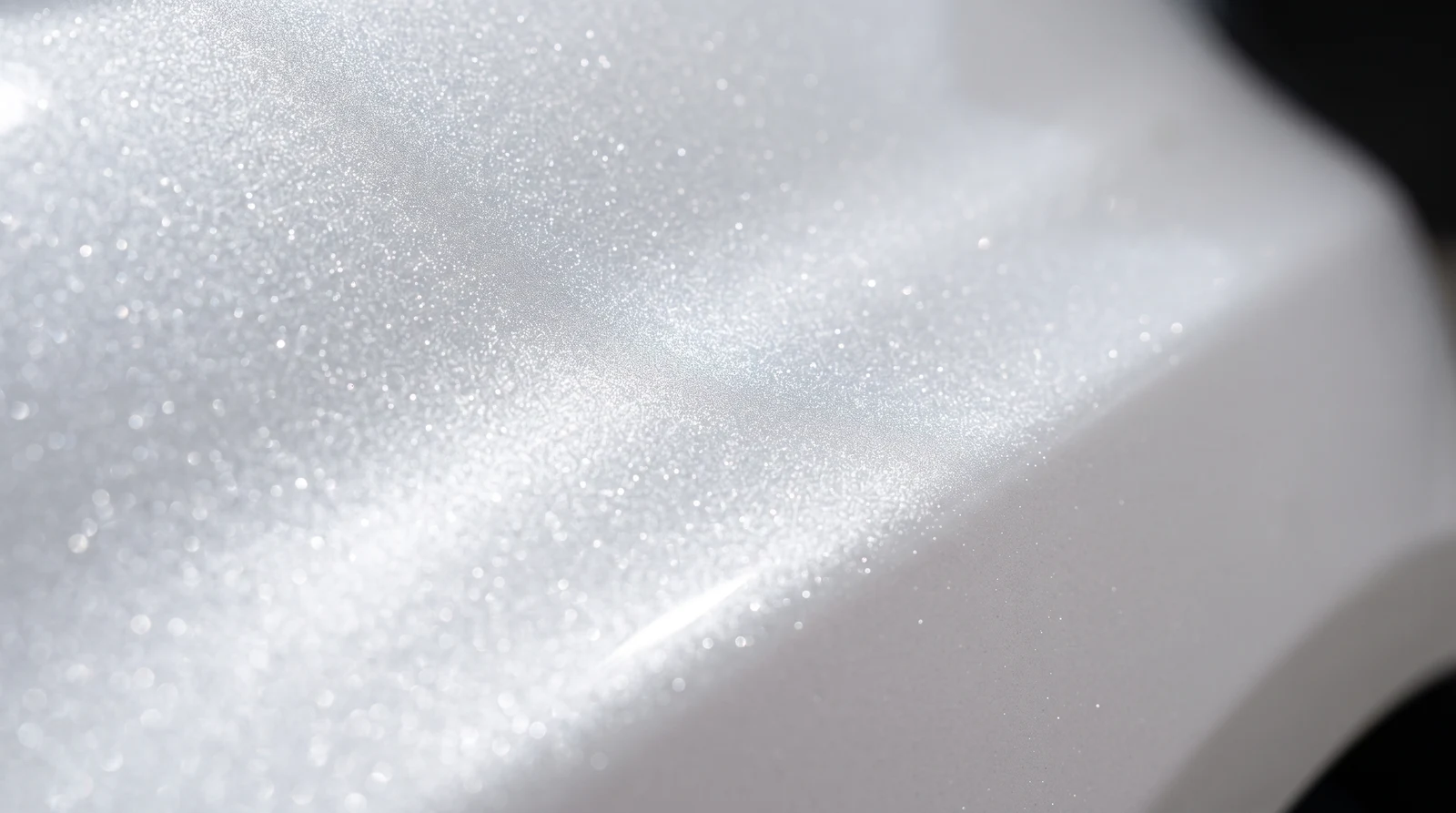
Tri-coat white is the most involved white finish a factory offers. Instead of one white layer, it's built from a white base coat, a pearl mica mid-coat, and a clear top coat sprayed in sequence — three distinct layers doing three different jobs. The result is a white that doesn't just reflect light evenly like a flat white wall; it has a soft depth and a faint shift toward silver or blue in direct sun that a single-stage white can't produce.
Where Star White Metallic Tri-Coat Came From
Tri-coat pearl systems came out of Japanese paint labs in the 1990s, originally developed to replicate the look of fine lacquer and porcelain. White was one of the hardest colors to give depth to — dark colors get drama for free from shadow and contrast, but white starts flat. Adding a pearl mid-coat was the fix, and tri-coat white became a signature premium option across several manufacturers' lineups once the process was refined enough to apply consistently on a production line.
How Star White Metallic Tri-Coat Is Applied
The base white goes down first and is left slightly underdeveloped on its own — it's not meant to look finished at that stage. The pearl mid-coat is sprayed next in thin, even passes, since too much mica muddies the white rather than enhancing it. Clear coat seals the whole stack. Each layer needs its own flash time before the next goes on, which is why tri-coat jobs take noticeably longer in the booth than a standard two-stage color.
What Star White Metallic Tri-Coat Looks Like in Different Light
Under flat or overcast light, tri-coat white can look almost identical to a standard solid white. Direct sun is where it separates itself: the mica catches the light and throws a cool, slightly metallic highlight across the high points of each panel, while the recessed areas stay a purer white. At night under sodium or LED lot lighting, the effect mostly disappears and the car reads as a clean, bright white.
Caring for a Star White Metallic Tri-Coat Finish
Because the color depends on an intact, evenly distributed mica layer, swirl marks and heavy polishing compounds show up more obviously on tri-coat white than on a solid white — you can actually burn through enough clear to dull the pearl effect on a high spot if a shop gets aggressive with a rotary buffer. Hand washing and a gentler dual-action polisher are the safer long-term choice.
Star White Metallic Tri-Coat vs. Other Finishes
Against a standard solid white, tri-coat trades simplicity for depth: solid white is cheaper, easier to touch up, and completely consistent panel to panel, while tri-coat adds the subtle shift and perceived premium look at a real cost and repair-complexity penalty. Compared to a two-stage pearl white, tri-coat uses a dedicated mid-coat step rather than blending pearl directly into the base, which is what gives it the extra depth two-stage pearls don't quite reach.
How Long Star White Metallic Tri-Coat Lasts
The clear coat and pearl layer age the same way any modern coating does — UV exposure is the main long-term threat, and a garaged car will hold the finish's depth years longer than one left in direct sun daily. The bigger durability concern is panel damage: because the color depends on three stacked layers, a repaint that doesn't reproduce the mid-coat correctly will visibly mismatch even if the base white looks right from a distance.
Which Vehicles Suit Star White Metallic Tri-Coat Best
Tri-coat white tends to suit larger, smoother body panels — sedans, SUVs, and coupes with big uninterrupted surfaces — since that's where the pearl shift has room to show. On vehicles with a lot of body cladding or sharp character lines, the effect reads as more subtle simply because there's less continuous paint for the light to move across.
Cost Considerations
Tri-coat finishes are consistently one of the more expensive factory paint options, usually carrying a dedicated upcharge on the sticker separate from any other paint fee, and a repaint or panel respray at a body shop costs meaningfully more than a solid color because of the extra layer and labor time.
Common Misconceptions About Star White Metallic Tri-Coat
A common assumption is that tri-coat white is just a more expensive marketing name for the same paint as solid white. It isn't — the three-layer structure is a genuinely different application process, not a labeling choice, and it produces a visibly different result in direct sunlight even if the two look similar in a showroom under flat lighting.
Frequently Asked Questions
Is tri-coat white the same as pearl white?
Related but not identical. Pearl white typically blends mica into the base or top coat; tri-coat white uses a fully separate mid-coat dedicated to the pearl, which is what gives it extra depth compared to a standard two-stage pearl.
Can a body shop match tri-coat white exactly?
Yes, but it takes a shop experienced with three-stage systems specifically. The base, pearl mid-coat, and clear all need to be applied in the right proportions and order, and a shop used to only two-stage work can end up with a visibly flatter result.
Why does tri-coat white cost more to repair than solid white?
There's a genuine extra layer and extra labor step involved, plus more risk of a visible mismatch if the mid-coat isn't applied correctly, so shops price the added time and risk into the job.