On this page
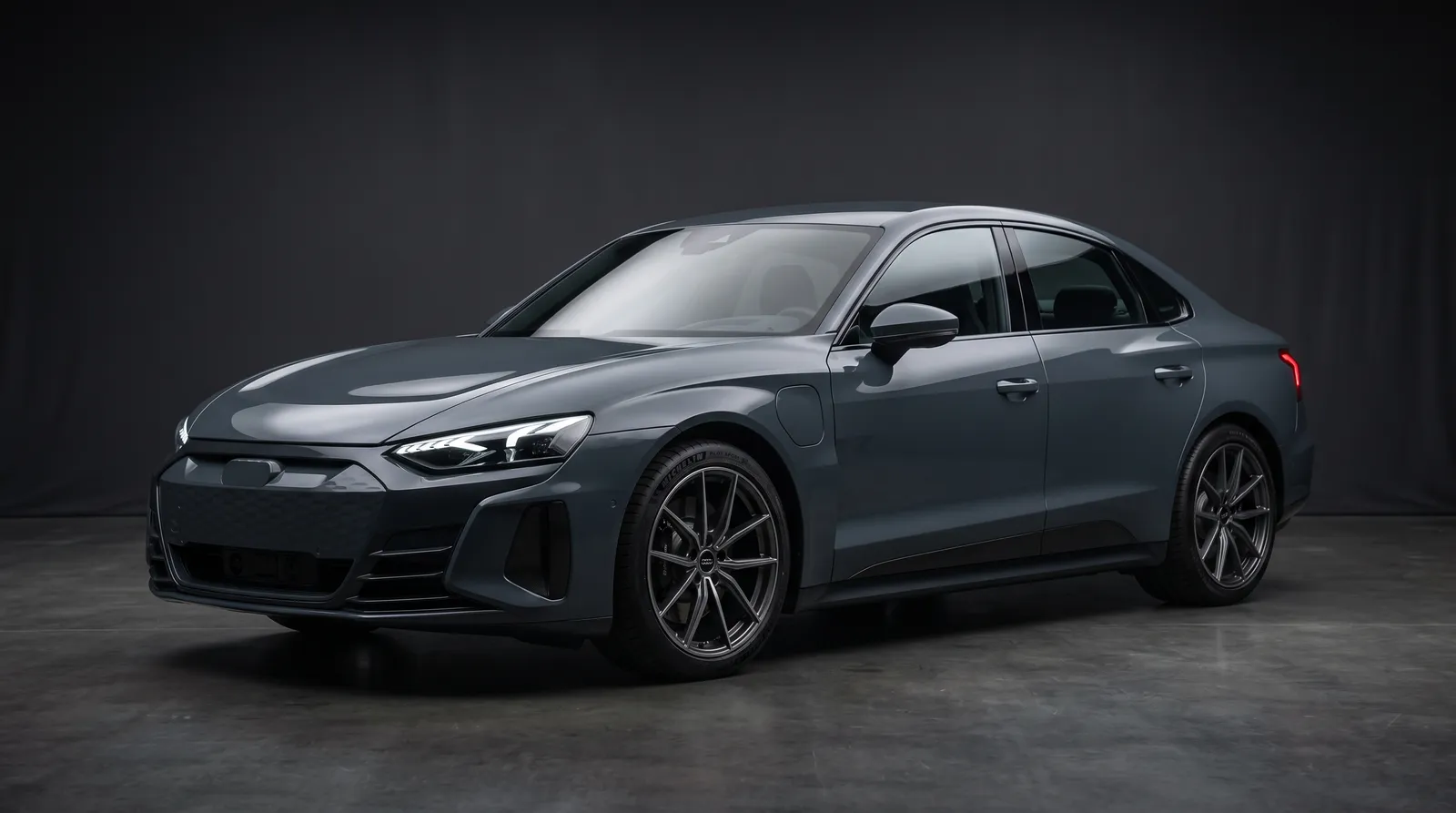
Charcoal gray sits at the darkest end of the gray family, close enough to black to read as formal and substantial, while retaining just enough gray character to avoid black's full maintenance burden. It's become something of a modern default — the color many buyers land on when they want something darker and more serious than standard gray but aren't fully committed to black.
It works across nearly every vehicle body style, from compact cars to full-size trucks, without looking out of place on any of them.
Where Charcoal Gray Came From
Charcoal gray's rise as a leading modern neutral is a relatively recent trend, emerging as manufacturers looked to expand their gray offerings beyond a single mid-tone option to better differentiate trim levels and appeal to buyers wanting something darker than standard gray but less demanding than black.
Its growth has closely tracked the broader popularity surge of SUVs and crossovers, vehicle types where a darker, more substantial-feeling neutral has particularly strong appeal.
What Makes Charcoal Gray a Popular Choice
Charcoal gray has grown into one of the most commonly ordered darker neutrals, particularly on crossovers and SUVs where manufacturers want a color that reads as premium and purposeful without the upkeep reputation of true black.
Is Charcoal Gray Right for You?
Charcoal gray has become something close to the default modern choice for buyers who want a dark, purposeful color without the full maintenance commitment of true black — it's a genuinely practical middle ground that's earned its popularity rather than just following a trend.
It works particularly well on SUVs and trucks, where its darker tone adds visual weight and presence that a lighter gray doesn't quite deliver, while still remaining noticeably easier to keep looking clean than black.
If you're deciding between charcoal and true black, it's worth test-viewing both in direct sun — charcoal's slight lightness compared to black becomes clearer outdoors than it often appears in showroom lighting.
It's also worth thinking beyond the moment of choosing and picturing the vehicle a few years in — colors that photograph beautifully fresh out of a detail sometimes ask more of an owner over time than expected, while a color that seemed plain at first can turn out to be the one you never have to think about. Talking to current owners of the same color, through online owner communities or local car meets, is one of the most reliable ways to get an honest, lived-in read on a shade before committing to it yourself.
How Charcoal Gray Looks in Different Light
Charcoal holds its dark, neutral character fairly consistently across lighting, looking close to black in low light and clearly distinguishing itself as gray rather than black once direct sunlight hits the surface.
It's also worth checking how a color reads under artificial lighting specifically, since showroom halogen or LED lighting, streetlights at night, and your own garage's bulbs can each cast a slightly different color temperature that shifts how the paint appears compared to natural daylight. If you're choosing between two close shades, viewing physical samples under your own garage or driveway lighting — not just in a showroom — will give you the most accurate sense of how the color will actually look where you'll see it most.
Caring for a Charcoal Gray Paint Job
Charcoal splits the difference in upkeep — it shows more than a mid-tone gray but noticeably less than true black, making it a popular practical choice for buyers who want a dark, formal look without black's full detailing commitment.
A simple, consistent routine matters more than any single specialized product: rinse loose dirt before touching the surface to avoid grinding grit into the clear coat, wash with a dedicated car-wash soap rather than household detergent, and dry with a clean microfiber towel instead of letting water air-dry and spot. Applying a wax or synthetic sealant every few months adds a sacrificial layer that takes the brunt of minor environmental damage instead of the clear coat itself.
Charcoal Gray in Hot and Cold Climates
Charcoal gray performs reasonably well across most climates, absorbing somewhat more heat than lighter grays in sunny regions but considerably less than true black.
In winter climates, it shows road salt moderately, striking a practical middle ground for buyers in snowy regions who want a darker color without black's full maintenance demands.
Wheel, Trim & Interior Pairings
Charcoal gray pairs well with black wheels for a cohesive, purposeful look, or with silver wheels for a bit more contrast and visual brightness.
It works comfortably with most interior colors, offering flexibility similar to standard gray while reading as more substantial.
Charcoal Gray Finish Options
Charcoal gray is most common as a metallic finish, which adds depth without pushing the color as cool and pronounced as gunmetal's more distinctly metallic character.
If you're unsure which specific finish variant you want, it's worth looking at a few physical samples side by side rather than deciding from photos alone — finish texture in particular is notoriously hard to judge accurately on a screen, and small differences in gloss level can change the overall impression of a color more than you'd expect.
Factory Colors Named Charcoal Gray
31 factory colors from different manufacturers have a name that includes “charcoal gray”. Here are the closest matches. The paint code is what you need to order matching paint; the on-screen swatch is only an approximation.
| Make and model | Factory color | Paint code | Years |
|---|---|---|---|
| Suzuki | Charcoal Gray | ZMA | 2010–2013 |
| Hyundai Accent | Charcoal Gray | 2M | 2001–2011 |
| GM | Charcoal Gray | 70 | 2009–2010 |
| Pontiac | Charcoal Gray | 70 | 1957–2010 |
| Ford | Charcoal Gray | TC | 2002–2004 |
| Lincoln Aviator | Charcoal Gray | TC | 2002–2004 |
| Suzuki | Charcoal Gray | 38B | 1991–1995 |
| Dodge | Charcoal Gray | FA7 | 1983–1990 |
| Jeep | Charcoal Gray | AA9 | 1990 |
| Plymouth | Charcoal Gray | FA7 | 1956–1990 |
| Subaru | Charcoal Gray | 116 | 1990 |
| Subaru | Charcoal Gray | 916 | 1989 |
| Dodge Dodge Truck | Charcoal Gray | AA9 | 1983–1988 |
| Maserati | Charcoal Gray | 224-553 | 1986 |
Matching Your Factory Charcoal Gray
Charcoal formulations vary in warmth and darkness between manufacturers, so always confirm your exact factory code before mixing repair paint rather than matching from a general charcoal reference.
Finding the code usually starts with the driver's-side door jamb, where most manufacturers place a sticker listing the paint code alongside the VIN and other build information; some brands instead list it inside the glovebox, trunk lid, or under the hood near the strut tower. If that sticker is faded, missing, or was replaced during a prior repair, the VIN itself can usually be decoded to recover the original factory paint code, which is the approach our lookup tool is built around.
Cost to Paint Your Car Charcoal Gray
Charcoal gray prices as a standard metallic color on most jobs — see our cost guide for a full breakdown.
Beyond the color and finish itself, the biggest factors in any repaint or repair quote are the amount of surface prep needed (rust, dents, or old damage add time), how many panels are involved, and whether the job requires full disassembly of trim and lights to get clean, sprayed-in edges. A single-panel touch-up naturally costs a small fraction of a full respray, so it's worth being specific with any shop about exactly what you need done before comparing quotes.
Common Misconceptions About Charcoal Gray
A common misconception is that charcoal gray and standard dark gray are always the same; the terms overlap substantially but aren't perfectly interchangeable across every manufacturer's specific formulations.
Another misconception is that charcoal offers no meaningful maintenance advantage over black; most owners do find it noticeably easier to keep looking clean, even if the difference isn't dramatic.
A related misconception worth addressing directly: online photos are a genuinely unreliable way to judge any color precisely, since phone cameras and displays each process color slightly differently, and listing photos are frequently color-corrected or shot under mixed lighting. Whenever a specific shade matters to a purchase or repair decision, a physical sample viewed in person — ideally outdoors in natural light — remains the only fully reliable reference.
Before You Commit: A Quick Checklist
- Compare it directly against both standard dark gray and true black before deciding.
- View the sample in direct sunlight, where the difference from black is clearest.
- Confirm the exact factory code for accurate future repair matching.
Frequently Asked Questions
Is charcoal gray the same as dark gray?
They overlap significantly; charcoal is generally understood as the darkest end of the gray spectrum, closest to black. See our dark gray color page for a direct comparison.
Is charcoal gray easier to maintain than black?
Yes, modestly — it still shows marks but generally less starkly than a true black finish.
Does charcoal gray suit trucks and SUVs well?
Very well — it's become one of the most popular darker neutral choices for larger vehicles specifically for its purposeful, premium look.
Is charcoal gray a good resale color?
Yes, it's considered one of the safer modern neutral choices, similar in appeal to standard gray, black, and white.
Does charcoal gray work well on both cars and trucks?
Yes — Charcoal Gray translates well across body styles; the main visual difference is how much surface area is available to show off the color's depth and finish.
What should I ask my shop for when requesting charcoal gray?
Always lead with your factory paint code if your vehicle has one, and ask to see a physical spray-out sample rather than relying on a screen or printed swatch alone.
Does charcoal gray affect insurance rates?
No — paint color has no bearing on insurance premiums for any vehicle; rates are based on the vehicle's make, model, and risk profile.
Can charcoal gray be custom-mixed if it's not my vehicle's factory color?
Yes, most professional shops can custom-mix a close or exact match to this shade even if it wasn't originally offered on your specific vehicle.
Is charcoal gray a factory-standard color on most vehicles?
It has become an increasingly standard offering across many manufacturers' lineups, particularly on SUVs and crossovers, though availability still varies by specific model.
Does charcoal gray look different from dark gray in photos?
The difference can be subtle in photos and clearer in person or in direct sunlight, where charcoal's slightly darker, often warmer undertone becomes more apparent.
Is charcoal gray a popular wheel color pairing too?
Yes, charcoal or black wheels are a common and complementary pairing with a charcoal gray body for a cohesive, modern look.
Look Up the Exact Code
Want to match charcoal gray exactly, whether it's a factory color or a custom mix? Use the color code tool to find the manufacturer code for your specific make and model, or browse custom color options.