On this page
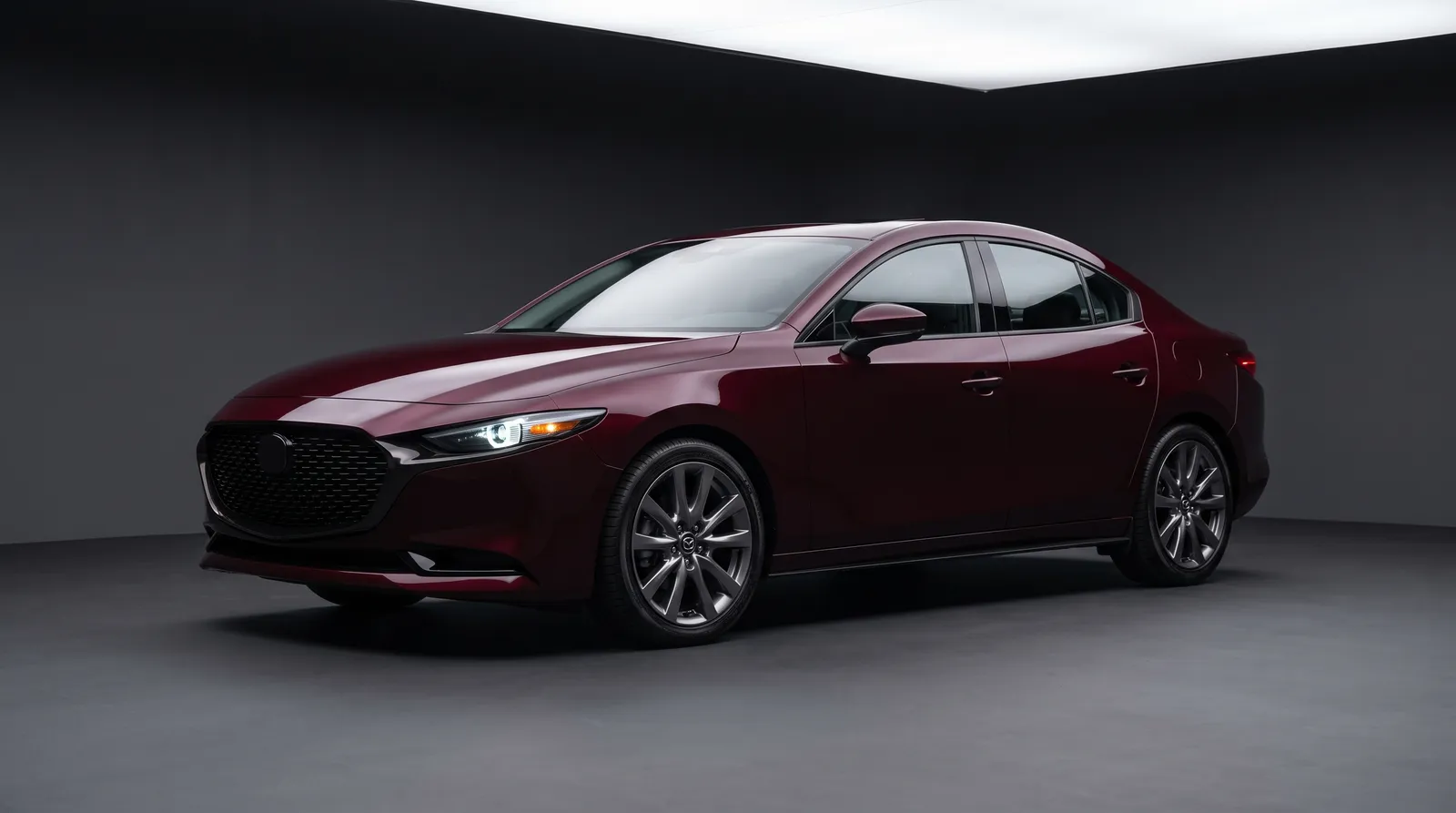
Black Cherry is one of those colors that photographs almost black in shade and ignites into deep red and purple the instant it catches direct sunlight. That shift is the entire appeal: it reads as a serious, understated black from across a parking lot, then reveals a candy-like depth up close that a flat black paint job simply cannot match.
The look is usually built in layers rather than mixed as a single tinted paint. A black or near-black base coat goes down first, then a transparent red or purple-tinted clear coat is applied over it, and the color you see is really light passing through that tinted layer and bouncing off the dark base underneath. That layered construction is why black cherry paint jobs are associated with custom shops and show cars rather than mainstream factory production.
Where Black Cherry Came From
Candy-style finishes trace back to the custom car and hot rod scene of the mid-20th century, when builders started experimenting with tinted lacquers over dark bases to get an effect factory paint simply couldn't produce. Black cherry specifically became a signature shade within that broader candy tradition, prized for how dramatically it shifted between near-black and deep red-purple depending on the light.
Over the decades it's cycled in and out of peak popularity alongside broader custom car trends, but it's never really disappeared — it remains one of the most-requested candy shades at custom shops precisely because it delivers such a strong, recognizable effect without needing an unusual or hard-to-source tint.
What Makes Black Cherry a Popular Choice
Black cherry has deep roots in hot rod, lowrider, and motorcycle culture, where a candy-style finish has always signaled that a vehicle received real attention rather than a stock repaint. It's a common choice for one-off custom builds, show cars, and enthusiast projects where the owner wants a color nobody else on the road is running.
It has also crept into mainstream trim names over the years under various manufacturer labels for deep red-black metallics, though the true multi-layer candy version remains mostly a custom and specialty-shop offering rather than something you order off a factory build sheet.
Is Black Cherry Right for You?
If you're weighing black cherry against a flat solid color, it helps to think of it less as "a color" and more as "an effect." A solid paint job gives you one consistent look from every angle and in every light. Black cherry gives you a color that performs differently depending on where the sun is, how the panel curves, and how close you're standing — which is exactly why owners who choose it tend to be people who want their vehicle to reward a second look rather than announce itself immediately.
It suits vehicles with strong, simple body lines particularly well, since the layered clear coat catches and releases light differently along creases and curves — a flatter panel design won't show off the effect as dramatically. It's a less natural fit for a vehicle you plan to keep for one season and flip; the extra cost and specialized repair needs make more sense as a longer-term ownership choice.
Climate is worth considering too. Vehicles that live outdoors year-round in intense sun will see the tinted clear coat work harder than one that's garaged, which can mean slightly more attention to UV protection over the years to keep the depth from flattening out. None of this makes black cherry impractical — it just rewards an owner who's willing to put in a bit more care than a basic solid black would ask for.
It's also worth thinking beyond the moment of choosing and picturing the vehicle a few years in — colors that photograph beautifully fresh out of a detail sometimes ask more of an owner over time than expected, while a color that seemed plain at first can turn out to be the one you never have to think about. Talking to current owners of the same color, through online owner communities or local car meets, is one of the most reliable ways to get an honest, lived-in read on a shade before committing to it yourself.
How Black Cherry Looks in Different Light
Under overcast skies or in a dim garage, black cherry can look almost indistinguishable from plain black — that's expected, not a flaw. Direct sun is what activates the color: watch a black cherry panel as the sun moves and you'll see the red/purple undertone strengthen at the edges and in the curves where light rakes across the surface.
At night under sodium or LED lot lighting the color tends to swing warmer, often reading closer to a deep maroon than the purple-black it shows in daylight.
It's also worth checking how a color reads under artificial lighting specifically, since showroom halogen or LED lighting, streetlights at night, and your own garage's bulbs can each cast a slightly different color temperature that shifts how the paint appears compared to natural daylight. If you're choosing between two close shades, viewing physical samples under your own garage or driveway lighting — not just in a showroom — will give you the most accurate sense of how the color will actually look where you'll see it most.
Caring for a Black Cherry Paint Job
Because the finish depends on a tinted clear coat, protecting that clear layer matters more here than on a solid color. Scratches or heavy compounding can cut through the tint and expose the base coat underneath, which shows up as a visibly lighter, flatter patch instead of just a scuff.
Like any dark, glossy finish it will show swirl marks and water spots more readily than a lighter or matte color, so a two-bucket wash method and a dedicated ceramic or wax layer are worth the extra effort. Avoid automatic car washes with abrasive brushes if you want to keep the candy layer looking deep rather than hazy.
A simple, consistent routine matters more than any single specialized product: rinse loose dirt before touching the surface to avoid grinding grit into the clear coat, wash with a dedicated car-wash soap rather than household detergent, and dry with a clean microfiber towel instead of letting water air-dry and spot. Applying a wax or synthetic sealant every few months adds a sacrificial layer that takes the brunt of minor environmental damage instead of the clear coat itself.
Black Cherry in Hot and Cold Climates
In hot, sun-heavy climates, the tinted clear coat that gives black cherry its depth is also the layer most exposed to UV stress, so owners in places like the desert Southwest should plan on more frequent wax or ceramic protection than a black cherry owner in a milder climate would need. Garaging the vehicle, even just under a carport, meaningfully slows that process.
In colder climates, road salt and winter grime show up starkly against the dark, glossy base, and salt exposure over a full winter without regular washing can dull the clear coat's shine faster than in a snow-free region. A rinse-down after salted roads is worth the few extra minutes.
Wheel, Trim & Interior Pairings
Black cherry pairs naturally with black or dark chrome wheels and trim, letting the paint's own depth carry the visual interest without competing accents. Red or amber lighting accents can echo the paint's warm undertone for a cohesive custom build.
For interiors, black or dark red leather complements the exterior's tone without clashing, while a lighter interior can create a striking, intentional contrast for owners who want the cabin to feel distinct from the exterior.
Black Cherry Finish Options
Black cherry is a finish family more than a single shade, and it's almost always built as a pearl or candy layer rather than a flat solid. If you like the concept but want something closer to a factory-style single-stage option, our pearl and metallic finish guides below cover the mechanically simpler alternatives.
If you're unsure which specific finish variant you want, it's worth looking at a few physical samples side by side rather than deciding from photos alone — finish texture in particular is notoriously hard to judge accurately on a screen, and small differences in gloss level can change the overall impression of a color more than you'd expect.
Factory Colors Named Black Cherry
43 factory colors from different manufacturers have a name that includes “black cherry”. Here are the closest matches. The paint code is what you need to order matching paint; the on-screen swatch is only an approximation.
| Make and model | Factory color | Paint code | Years |
|---|---|---|---|
| Cadillac Escalade | Black Cherry | GAB | 2009–2026 |
| GM | Black Cherry | GAB | 2020–2025 |
| Chevrolet | Black Cherry | GLR | 1970–2023 |
| Chevrolet Trax | Black Cherry | GNL | 2021–2022 |
| Kia Rondo | Black Cherry | 9H | 2005–2021 |
| Bentley | Black Cherry | 9560156 | 2019–2020 |
| Buick | Black Cherry | GGA | 2017–2019 |
| Buick Encore | Black Cherry | GJ6 | 2017–2018 |
| GM | Black Cherry | GGA | 2017–2018 |
| GMC Acadia | Black Cherry | GGA | 1982–2018 |
| Nissan 370Z | Black Cherry | NAG | 2010–2018 |
| Toyota Corolla | Black Cherry | 3P2 | 2001–2017 |
| Jaguar | Black Cherry | PEH | 2006–2016 |
| Mazda CX-7 | Black Cherry | 28W | 2008–2012 |
Matching Your Factory Black Cherry
Because most black cherry paint jobs are custom-mixed rather than pulled from a factory code, matching an existing repair to the rest of the panel is a hand-skill job — a professional painter will tint the clear coat and test it against your panel in daylight before committing to a full mix. If your vehicle does have a manufacturer code for a black cherry or similar deep red-black metallic, start with our paint code tool to confirm it before any color work begins.
Finding the code usually starts with the driver's-side door jamb, where most manufacturers place a sticker listing the paint code alongside the VIN and other build information; some brands instead list it inside the glovebox, trunk lid, or under the hood near the strut tower. If that sticker is faded, missing, or was replaced during a prior repair, the VIN itself can usually be decoded to recover the original factory paint code, which is the approach our lookup tool is built around.
Cost to Paint Your Car Black Cherry
Multi-layer candy finishes cost more than a single-stage repaint because of the extra clear coats, tinting work, and cure time between layers. Expect a black cherry job to sit above a standard solid-color repaint on most estimates — see the full breakdown in our cost guide.
Beyond the color and finish itself, the biggest factors in any repaint or repair quote are the amount of surface prep needed (rust, dents, or old damage add time), how many panels are involved, and whether the job requires full disassembly of trim and lights to get clean, sprayed-in edges. A single-panel touch-up naturally costs a small fraction of a full respray, so it's worth being specific with any shop about exactly what you need done before comparing quotes.
Common Misconceptions About Black Cherry
A common misconception is that black cherry is just a very dark solid red — in reality, the color depends entirely on its layered construction, and a solid paint mixed to "look like" black cherry in flat light will never replicate the effect direct sunlight reveals.
Another common mix-up is assuming any dark red-black paint job is automatically a true candy finish; many budget alternatives use a single tinted coat rather than genuine layered construction, producing a flatter, less dynamic result that only superficially resembles the real thing.
A related misconception worth addressing directly: online photos are a genuinely unreliable way to judge any color precisely, since phone cameras and displays each process color slightly differently, and listing photos are frequently color-corrected or shot under mixed lighting. Whenever a specific shade matters to a purchase or repair decision, a physical sample viewed in person — ideally outdoors in natural light — remains the only fully reliable reference.
Before You Commit: A Quick Checklist
- Ask to see a physical spray-out sample in direct sunlight, not just a screen image — the candy effect doesn't translate well to photos.
- Confirm how many clear coat layers your shop plans to apply and the expected cure time between them.
- Ask what happens if a future repair is needed — confirm your shop can accurately match the tinted clear coat, not just the base color.
- Budget for slightly more attentive long-term care (wax/ceramic coating) than a standard solid color would need.
Frequently Asked Questions
Is black cherry the same as candy apple red?
No. Candy apple is built the same way (tinted clear over a base) but uses a red-toward-orange tint. Black cherry uses a darker, more purple-leaning red tint over a black or near-black base, which is why it reads almost black until light hits it directly.
Will black cherry paint fade over time?
The tinted clear coat can lose intensity with years of UV exposure, same as any pigment. Keeping the vehicle garaged or regularly protected with wax/ceramic coating slows that fade noticeably.
Can a small scratch be touched up without redoing the whole panel?
Small chips can usually be spot-repaired by a painter experienced with layered candy finishes, but because the color depends on layer thickness and tint consistency, blending is more demanding than with a solid color — it's worth having it done by someone who's matched candy finishes before.
Does black cherry look different on metallic vs. non-metallic base coats?
Yes — a metallic base adds sparkle that shows through the tinted clear, giving a more dimensional, sparkling look. A solid base gives a smoother, more uniform candy effect without the flake.
Can I get black cherry on a truck or SUV, not just a car?
Yes — the layered candy technique works on any body panel; larger, flatter panels just show slightly less of the light-catching variation than curved sports car bodywork.
How long does a black cherry paint job typically take?
Expect it to take longer than a standard solid repaint due to the multiple clear coat layers and cure time between each — ask your shop for a specific timeline based on the scope of the job.
Is black cherry more expensive to insure or register?
No — paint color, including specialty finishes like black cherry, has no bearing on insurance rates or vehicle registration costs.
Can black cherry be applied to plastic bumpers and trim, not just metal panels?
Yes, with proper prep and primer, the layered candy technique can be applied to plastic body components, though it's worth confirming your specific painter's experience with plastic substrates.
Look Up the Exact Code
Want to match black cherry exactly, whether it's a factory color or a custom mix? Use the color code tool to find the manufacturer code for your specific make and model, or browse custom color options.