On this page
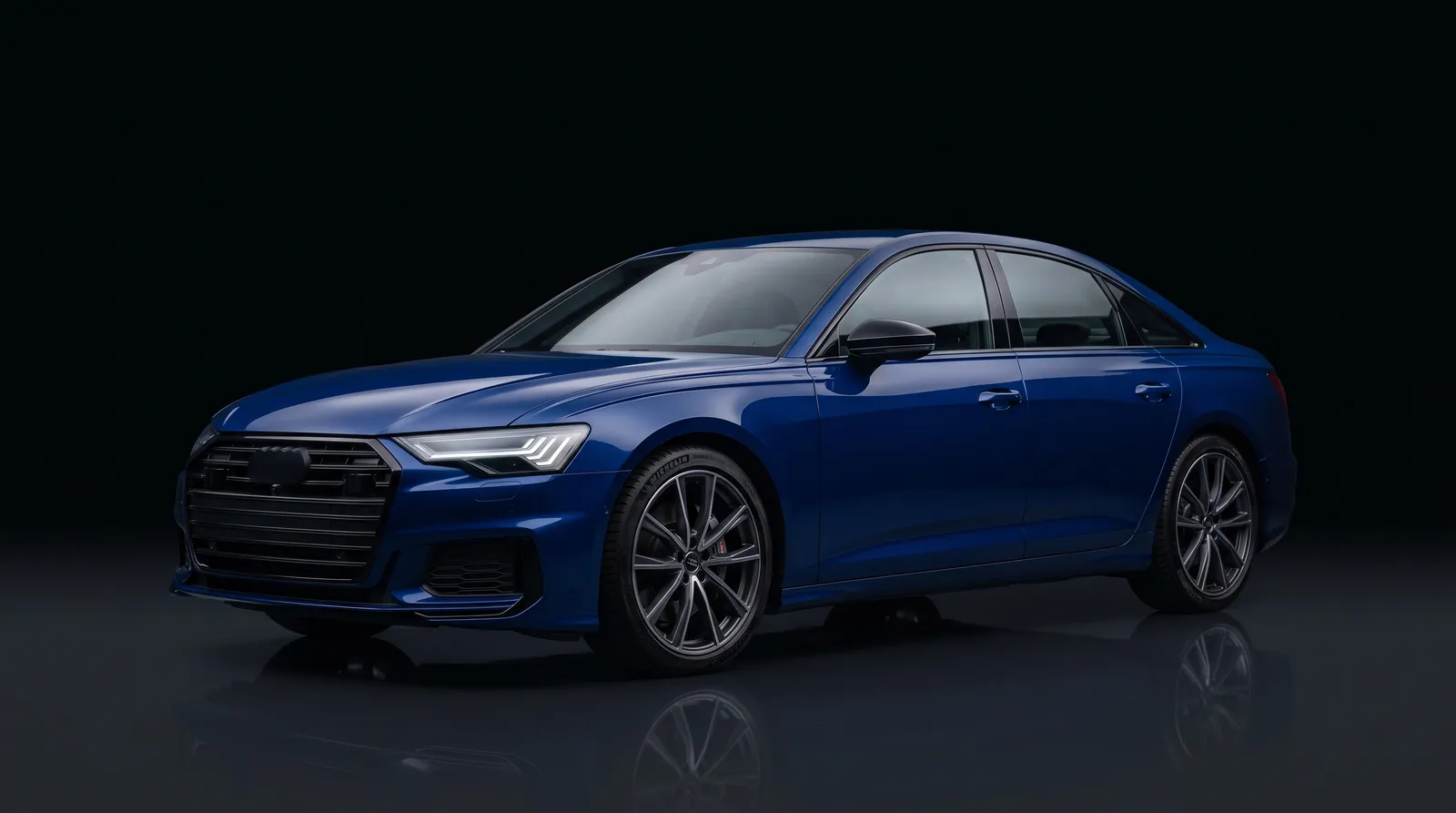
Dark blue offers a genuine alternative to black for owners who want a formal, professional-looking vehicle with a bit more visual character. It's deep enough to read as serious and upscale from a distance, while still clearly presenting as blue rather than reading as black in most lighting.
It's become a particularly popular choice on trucks and sedans as a way to stand apart from the sea of black, white, and gray vehicles without going as bold as a bright blue or another saturated color.
Where Dark Blue Came From
Dark blue has had a steady, if understated, presence across automotive history, often positioned as the more distinctive alternative to black on vehicles aiming for a formal, professional look without fully committing to black's starkness.
Its popularity has grown further in recent years as buyers increasingly look for ways to stand out from the extremely common black, white, and gray trio while still keeping a conservative, broadly acceptable color choice.
What Makes Dark Blue a Popular Choice
Dark blue is common across sedans, trucks, and SUVs as a professional-but-distinctive alternative to black. It carries less of a "sporty" association than bright blue, making it a common choice for buyers who want a serious, grown-up color without defaulting to a neutral.
Is Dark Blue Right for You?
Dark blue works well as the color for buyers who've ruled out black for maintenance reasons but still want something that reads as serious and professional. It holds its blue identity more clearly than midnight blue across most lighting, so if you specifically want people to register "blue" rather than mistake it for black, dark blue is the more reliable choice of the two.
It's a strong fit for trucks and sedans used in professional or business contexts, where a distinctive but still conservative color choice matters. Compared to a bright blue, it carries less of a sporty association and more of a steady, dependable one.
If you're deciding between dark blue and midnight blue, viewing both in direct sunlight side by side is the best way to judge which reads closer to what you actually want — the difference is subtle in photos but clear in person.
It's also worth thinking beyond the moment of choosing and picturing the vehicle a few years in — colors that photograph beautifully fresh out of a detail sometimes ask more of an owner over time than expected, while a color that seemed plain at first can turn out to be the one you never have to think about. Talking to current owners of the same color, through online owner communities or local car meets, is one of the most reliable ways to get an honest, lived-in read on a shade before committing to it yourself.
How Dark Blue Looks in Different Light
Dark blue holds its hue more consistently than midnight blue across different lighting, since it sits further from black on the color scale — it reads as clearly blue in most conditions, deepening toward navy in low light rather than approaching black.
It's also worth checking how a color reads under artificial lighting specifically, since showroom halogen or LED lighting, streetlights at night, and your own garage's bulbs can each cast a slightly different color temperature that shifts how the paint appears compared to natural daylight. If you're choosing between two close shades, viewing physical samples under your own garage or driveway lighting — not just in a showroom — will give you the most accurate sense of how the color will actually look where you'll see it most.
Caring for a Dark Blue Paint Job
Dark blue carries moderate maintenance demands — more visible marks than a mid-tone color, but somewhat more forgiving than true black or jet black. Regular washing and periodic polishing keep it looking its best, with standard sun and heat considerations for any darker finish.
A simple, consistent routine matters more than any single specialized product: rinse loose dirt before touching the surface to avoid grinding grit into the clear coat, wash with a dedicated car-wash soap rather than household detergent, and dry with a clean microfiber towel instead of letting water air-dry and spot. Applying a wax or synthetic sealant every few months adds a sacrificial layer that takes the brunt of minor environmental damage instead of the clear coat itself.
Dark Blue in Hot and Cold Climates
Dark blue behaves similarly to other dark colors in hot climates — moderate heat absorption and standard UV protection recommendations apply for long-term color retention in sunny regions.
In winter climates, it shows road salt and grime with moderate visibility, benefiting from regular washing through the season to avoid a dulled appearance setting in.
Wheel, Trim & Interior Pairings
Dark blue pairs well with both black and silver wheels, depending on whether you want a more understated or slightly brighter overall look.
Tan or black interiors both complement dark blue's professional character effectively.
Dark Blue Finish Options
Dark blue is available in solid, metallic, and pearl finishes, with metallic being the most common for the added visual depth on body panels and curves.
If you're unsure which specific finish variant you want, it's worth looking at a few physical samples side by side rather than deciding from photos alone — finish texture in particular is notoriously hard to judge accurately on a screen, and small differences in gloss level can change the overall impression of a color more than you'd expect.
Factory Colors Named Dark Blue
226 factory colors from different manufacturers have a name that includes “dark blue”. Here are the closest matches. The paint code is what you need to order matching paint; the on-screen swatch is only an approximation.
| Make and model | Factory color | Paint code | Years |
|---|---|---|---|
| Chevrolet Captiva | Dark Blue | 47U | 1964–2026 |
| Chevrolet Express | Dark Blue | 5IH | 1973–2026 |
| Mercedes C | Dark Blue | 904 | 1980–2026 |
| Ford Explorer | Dark Blue | LK | 1980–2025 |
| GM | Dark Blue | 47U | 2000–2025 |
| Porsche 911 | Dark Blue | M5X | 2000–2025 |
| Toyota | Dark Blue | 8Q4 | 2025 |
| Chevrolet Tahoe | Dark Blue | 9V7 | 2024 |
| GMC | Dark Blue | 5IH | 1964–2024 |
| Subaru Forester | Dark Blue | M2Y | 1996–2022 |
| Toyota 4Runner | Dark Blue | 8S6 | 1986–2022 |
| Ford Transit | Dark Blue | UV | 2012–2021 |
| Ford Crosstrainer | Dark Blue | DX | 2003–2015 |
| Scion | Dark Blue | 8S6 | 2004–2015 |
Matching Your Factory Dark Blue
As with all blues, an exact factory code match matters more than it might seem — a slightly-off dark blue is noticeable side by side. Every dark blue repair should start from a confirmed factory code.
Finding the code usually starts with the driver's-side door jamb, where most manufacturers place a sticker listing the paint code alongside the VIN and other build information; some brands instead list it inside the glovebox, trunk lid, or under the hood near the strut tower. If that sticker is faded, missing, or was replaced during a prior repair, the VIN itself can usually be decoded to recover the original factory paint code, which is the approach our lookup tool is built around.
Cost to Paint Your Car Dark Blue
Dark blue prices near the mainstream average for metallic colors — see our cost guide for job-specific estimates.
Beyond the color and finish itself, the biggest factors in any repaint or repair quote are the amount of surface prep needed (rust, dents, or old damage add time), how many panels are involved, and whether the job requires full disassembly of trim and lights to get clean, sprayed-in edges. A single-panel touch-up naturally costs a small fraction of a full respray, so it's worth being specific with any shop about exactly what you need done before comparing quotes.
Common Misconceptions About Dark Blue
A common misconception is that dark blue and midnight blue are the same thing; they're closely related but distinct, with midnight blue sitting closer to black on the lightness scale.
Another misconception is that dark colors are inherently a poor choice in hot climates; while there's a real heat-absorption difference, plenty of owners in warm regions choose dark blue successfully with appropriate care and, where possible, garaging.
A related misconception worth addressing directly: online photos are a genuinely unreliable way to judge any color precisely, since phone cameras and displays each process color slightly differently, and listing photos are frequently color-corrected or shot under mixed lighting. Whenever a specific shade matters to a purchase or repair decision, a physical sample viewed in person — ideally outdoors in natural light — remains the only fully reliable reference.
Before You Commit: A Quick Checklist
- Compare it directly against midnight blue and black before deciding — the differences are subtle in photos.
- Confirm the exact factory code for accurate future repairs.
- View the sample in direct sunlight to judge how clearly it reads as blue versus black.
Frequently Asked Questions
Is dark blue a good alternative to black?
Yes — it offers a similarly formal, upscale look with a bit more visual distinction and slightly easier day-to-day maintenance.
Does dark blue fade in the sun?
Less than bright reds and oranges, but any dark color benefits from regular UV protection to maintain its depth over years of exposure.
What's the difference between dark blue and midnight blue?
Midnight blue sits closer to black on the lightness scale and can look nearly black in low light; dark blue reads as clearly blue in more conditions. See our midnight blue color page for a direct comparison.
Does dark blue show water spots?
Yes, similar to other dark, glossy colors — regular drying after washing helps prevent mineral buildup from becoming visible.
Does dark blue work well on both cars and trucks?
Yes — Dark Blue translates well across body styles; the main visual difference is how much surface area is available to show off the color's depth and finish.
What should I ask my shop for when requesting dark blue?
Always lead with your factory paint code if your vehicle has one, and ask to see a physical spray-out sample rather than relying on a screen or printed swatch alone.
Does dark blue affect insurance rates?
No — paint color has no bearing on insurance premiums for any vehicle; rates are based on the vehicle's make, model, and risk profile.
Can dark blue be custom-mixed if it's not my vehicle's factory color?
Yes, most professional shops can custom-mix a close or exact match to this shade even if it wasn't originally offered on your specific vehicle.
Look Up the Exact Code
Want to match dark blue exactly, whether it's a factory color or a custom mix? Use the color code tool to find the manufacturer code for your specific make and model, or browse custom color options.