On this page
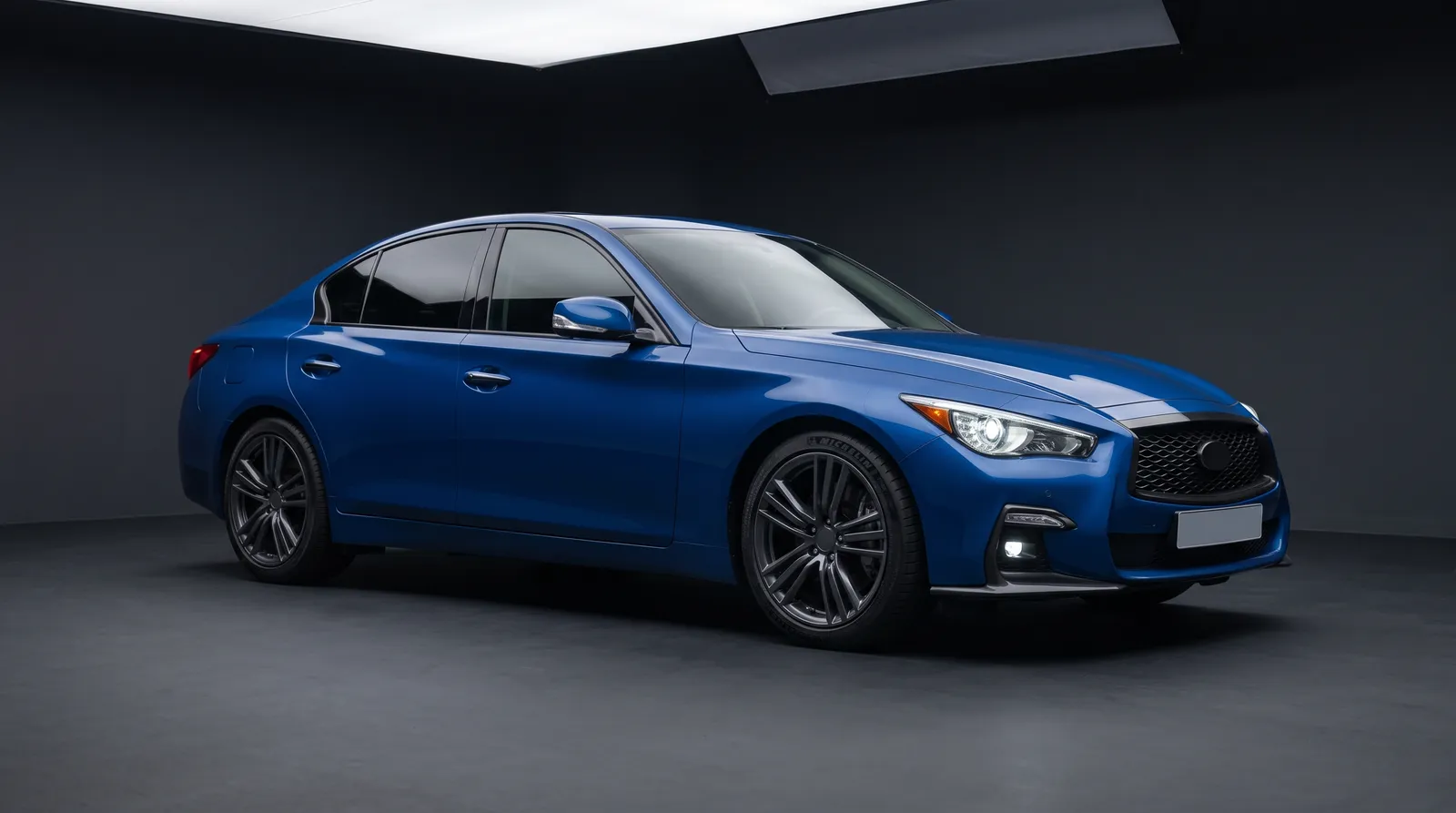
Blue is one of the broadest color families on the road, spanning everything from bright, saturated racing blues to soft, almost gray-leaning slate tones. What unites them is a reputation for looking clean and confident without the stark formality of black or the visual noise of red, which is a big part of why blue consistently ranks among the most-ordered non-neutral colors across manufacturers.
Because "blue" covers such a wide range, the practical difference between two blue vehicles can be larger than the difference between a blue car and a gray one. A vivid cobalt blue and a muted steel blue share a name but read completely differently in person, which makes it worth looking at actual paint chips or our code lookup tool rather than picking blue from a dropdown menu alone.
Where Blue Came From
Blue has been a mainstream automotive color since the earliest decades of mass car production, with deep ties to motorsport heritage that trace back to national racing colors used in early Grand Prix competition, where certain countries' teams were assigned specific colors and blue became associated with French racing efforts in particular.
That racing heritage has echoed through decades of manufacturer marketing, and it's a big part of why blue still carries a faint sporty, performance-oriented connotation today even on vehicles with no racing pretensions at all.
What Makes Blue a Popular Choice
Blue has strong ties to motorsport heritage — many manufacturers' performance and racing-inspired trims lean on blue, often paired with contrasting stripes, because of decades of association with works racing teams. That heritage carries into showroom trims today: brighter blues are common on performance and sport-trim vehicles, while muted, deep blues show up more on trucks, SUVs, and family sedans as a slightly more distinctive alternative to black or gray.
It also tends to perform well for resale, since it reads as a safe, broadly likable choice without being as ubiquitous as silver or white.
Is Blue Right for You?
Choosing the right blue really comes down to what you want the vehicle to say. A bright, saturated blue leans sporty and energetic — it's a common pick for buyers who want some of red's attention-grabbing quality without red's more aggressive association. A deep navy or slate blue does almost the opposite job, reading as calm and professional while still offering more visual interest than a straight black or gray.
Blue also tends to photograph consistently well, which matters if you're likely to sell the vehicle eventually and rely on online listing photos to attract buyers — unlike some metallics and pearls that can look dramatically different indoors versus outdoors, most blues hold their character across typical photography conditions.
If you're cross-shopping blue against black or gray for the same vehicle, it's worth test-driving the shade in person under a few different lighting conditions — a blue that looks great in a showroom's lighting can read noticeably differently in direct midday sun or under streetlights at night.
It's also worth thinking beyond the moment of choosing and picturing the vehicle a few years in — colors that photograph beautifully fresh out of a detail sometimes ask more of an owner over time than expected, while a color that seemed plain at first can turn out to be the one you never have to think about. Talking to current owners of the same color, through online owner communities or local car meets, is one of the most reliable ways to get an honest, lived-in read on a shade before committing to it yourself.
How Blue Looks in Different Light
Bright blues stay fairly consistent from direct sun to shade, though they can look slightly washed out under very harsh midday light and richer in the golden hour before sunset. Deeper, near-navy blues behave more like dark colors generally — they can look nearly black in low light and only reveal their blue undertone once the sun hits them directly or under bright indoor lighting.
It's also worth checking how a color reads under artificial lighting specifically, since showroom halogen or LED lighting, streetlights at night, and your own garage's bulbs can each cast a slightly different color temperature that shifts how the paint appears compared to natural daylight. If you're choosing between two close shades, viewing physical samples under your own garage or driveway lighting — not just in a showroom — will give you the most accurate sense of how the color will actually look where you'll see it most.
Caring for a Blue Paint Job
Mid-tone blues are relatively forgiving day to day — they hide light dust and minor swirl marks better than black but still benefit from regular washing to prevent water spot buildup, which shows more on blue than on gray or silver. Darker blues inherit more of black's maintenance demands: more visible swirl marks, more noticeable heat absorption in direct sun, and a stronger case for paint protection film on high-contact areas like door edges and mirrors.
A simple, consistent routine matters more than any single specialized product: rinse loose dirt before touching the surface to avoid grinding grit into the clear coat, wash with a dedicated car-wash soap rather than household detergent, and dry with a clean microfiber towel instead of letting water air-dry and spot. Applying a wax or synthetic sealant every few months adds a sacrificial layer that takes the brunt of minor environmental damage instead of the clear coat itself.
Blue in Hot and Cold Climates
Bright blues generally hold their vibrancy well across most climates, though intense, sustained desert sun will gradually mute even a high-quality pigment over many years. Coastal climates introduce salt air as a factor, which argues for slightly more frequent washing regardless of color, but doesn't affect blue specifically more than other colors.
In snowy regions, mid-tone and darker blues show road salt film readily, similar to other darker colors, so a post-storm rinse helps keep the color looking clean rather than chalky.
Wheel, Trim & Interior Pairings
Blue pairs well with both silver and black wheels depending on the specific shade — brighter blues tend to look sharp with silver or polished wheels, while deeper navy blues often pair better with black or dark gunmetal wheels.
White racing stripes remain a classic, widely recognized pairing for brighter blues specifically, nodding to decades of motorsport livery tradition.
Blue Finish Options
Blue is available across nearly every finish type — solid, metallic, pearl, and increasingly matte on performance trims. Metallic blue is by far the most common on modern vehicles because the added flake gives the color noticeably more depth than a flat solid blue.
If you're unsure which specific finish variant you want, it's worth looking at a few physical samples side by side rather than deciding from photos alone — finish texture in particular is notoriously hard to judge accurately on a screen, and small differences in gloss level can change the overall impression of a color more than you'd expect.
Factory Colors Named Blue
5579 factory colors from different manufacturers have a name that includes “blue”. Here are the closest matches. The paint code is what you need to order matching paint; the on-screen swatch is only an approximation.
| Make and model | Factory color | Paint code | Years |
|---|---|---|---|
| Chevrolet Fleet | Blue | 5IQ | 1972–2026 |
| Ford C-Max | Blue | FT | 1975–2025 |
| Ford Fleet | Blue | W8002H | 1957–2025 |
| Chevrolet | Blue | 5I7 | 1974–2024 |
| Chevrolet Silverado | Blue | 5JD | 2024 |
| GM | Blue | 5I7 | 2021–2024 |
| GMC Savana | Blue | 5IF | 2023–2024 |
| Nissan Z | Blue | RCK | 2023 |
| Hyundai | Blue | XB2 | 2022 |
| GMC | Blue | 5JD | 1979–2021 |
| Mercedes Sprinter | Blue | 7769 | 2019 |
| Jeep | Blue | PB1 | 2016 |
| Smart | Blue | CE1L | 2013–2016 |
| Lotus | Blue | B120 | 2014–2015 |
Matching Your Factory Blue
Blue is one of the categories where getting the exact shade right matters most, since a slightly-off blue is more noticeable to the eye than a slightly-off gray or black. Always start a blue match from your factory paint code rather than eyeballing it against a color chart — our paint code tool will walk you through finding it on your vehicle.
Finding the code usually starts with the driver's-side door jamb, where most manufacturers place a sticker listing the paint code alongside the VIN and other build information; some brands instead list it inside the glovebox, trunk lid, or under the hood near the strut tower. If that sticker is faded, missing, or was replaced during a prior repair, the VIN itself can usually be decoded to recover the original factory paint code, which is the approach our lookup tool is built around.
Cost to Paint Your Car Blue
Standard metallic blues price in line with most mainstream colors on a repaint or respray. Deeper pearl or tri-coat blue variants cost more due to the extra clear layers involved — see our cost guide for a full breakdown by job type.
Beyond the color and finish itself, the biggest factors in any repaint or repair quote are the amount of surface prep needed (rust, dents, or old damage add time), how many panels are involved, and whether the job requires full disassembly of trim and lights to get clean, sprayed-in edges. A single-panel touch-up naturally costs a small fraction of a full respray, so it's worth being specific with any shop about exactly what you need done before comparing quotes.
Common Misconceptions About Blue
A common misconception is that all factory blues are roughly interchangeable for touch-up purposes — in reality, the category spans such a wide range that a mismatched blue touch-up is often more visually obvious than a mismatch in a more forgiving neutral color.
Another misconception is that bright blue is inherently a "younger" or less serious color choice; in practice, deep and muted blues carry just as much presence on executive and luxury vehicles as they do sporty energy on performance trims.
A related misconception worth addressing directly: online photos are a genuinely unreliable way to judge any color precisely, since phone cameras and displays each process color slightly differently, and listing photos are frequently color-corrected or shot under mixed lighting. Whenever a specific shade matters to a purchase or repair decision, a physical sample viewed in person — ideally outdoors in natural light — remains the only fully reliable reference.
Before You Commit: A Quick Checklist
- Bring a specific reference photo or paint code rather than just saying "blue" — the range within this color family is enormous.
- View the sample in both direct sun and shade before committing.
- Decide upfront whether you want solid, metallic, or pearl — each changes the final look meaningfully.
- Ask about fade resistance if you're in a consistently sunny climate.
Frequently Asked Questions
Why do two "blue" cars from different brands look nothing alike?
Manufacturers each formulate their own blue shades, and "blue" as a category spans a huge range from near-purple to near-teal. Always check the actual paint code or a physical chip rather than assuming blues are interchangeable.
Does blue paint fade faster than other colors?
Not inherently — fade resistance depends more on pigment quality and UV protection than the hue itself. Cheaper red and blue pigments have historically been more fade-prone than white or black, but modern OEM and quality aftermarket paints have largely closed that gap.
Is metallic blue harder to touch up than solid blue?
Slightly — matching metallic flake density and orientation takes more skill than matching a flat solid color, but it's a routine job for an experienced painter with the right base coat.
What finish makes blue look the deepest?
A pearl or tri-coat blue typically reads as the deepest and most dimensional, since the pearl layer adds a shifting quality under different light angles that a standard metallic doesn't have.
Which blue is best for hiding daily dirt?
A mid-tone metallic blue tends to hide dust and light grime noticeably better than a very dark navy or a very bright saturated blue.
Does blue paint come in a matte finish?
Yes, matte blue has become increasingly available, particularly on performance trims, though it requires different care than a gloss blue finish.
Does blue paint affect resale value?
Blue generally performs well for resale, sitting just behind the top neutral colors in most markets, though the specific shade and vehicle type both influence this more than the color category alone.
Can I request a custom, non-factory blue shade?
Yes, most shops can custom-mix a blue outside the factory palette, though it will need to be treated as a specialty color for future matching purposes.
Look Up the Exact Code
Want to match blue exactly, whether it's a factory color or a custom mix? Use the color code tool to find the manufacturer code for your specific make and model, or browse custom color options.