On this page
High-gloss clear coat is the final, colorless layer sprayed over almost every modern factory paint job — it's not a color itself, but the finish technology responsible for the deep shine and UV protection you see on the vast majority of cars on the road. Any base color, from a flat solid to a multi-stage pearl, typically gets sealed under a high-gloss clear unless the vehicle was specifically ordered with a matte or satin finish instead.
Where High-Gloss Clear Coat Came From
Base-coat/clear-coat systems became the industry standard starting in the 1980s, replacing older single-stage paints where the color itself had to carry both the pigment and the shine. Separating those two jobs — color in the base coat, protection and gloss in the clear coat — let manufacturers use more vivid pigments and metallic or pearl effects that would have been impractical to formulate as a single durable paint layer on their own.
How High-Gloss Clear Coat Is Applied
Clear coat is sprayed as the final step after the color (and any pearl or tint layers) have been applied and allowed to flash. It contains no pigment at all — its job is purely to protect the color underneath from UV, oxidation, and minor abrasion while providing the glass-like optical clarity that makes the color underneath look as saturated and deep as possible.
What High-Gloss Clear Coat Looks Like in Different Light
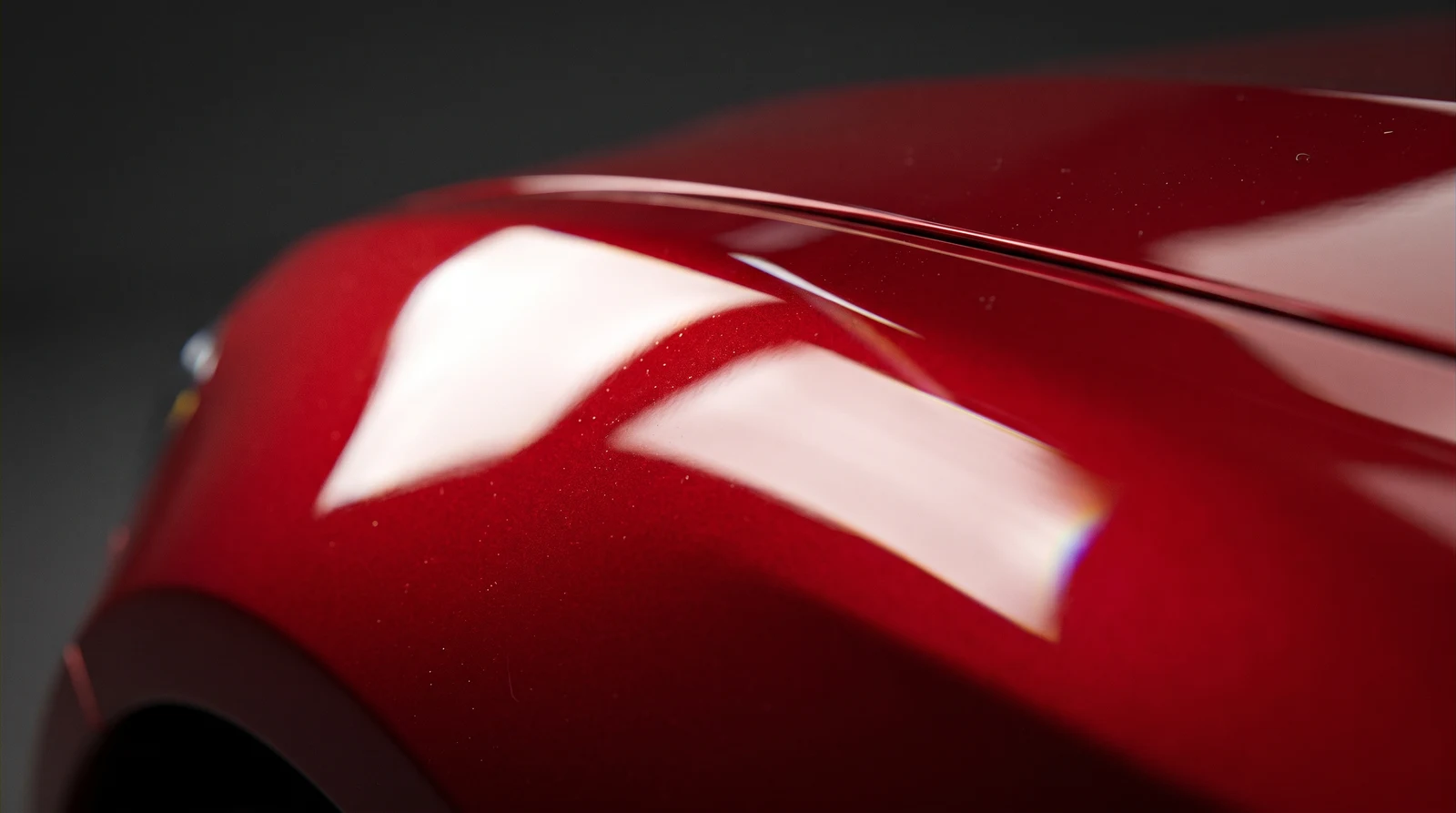
A well-applied high-gloss clear coat produces sharp, clean reflections — you should be able to see a crisp reflection of a light source or your surroundings in the paint, rather than a blurred or hazy one. Lighting conditions reveal clear coat quality more than they change the clear coat's own appearance, since it's transparent; what you're really seeing is how well it's preserving the color and reflections underneath.
Caring for a High-Gloss Clear Coat Finish
Caring for the clear coat is effectively caring for the whole paint job, since it's the layer directly exposed to sun, washing, and contact. Regular washing, periodic waxing or sealant application, and avoiding abrasive cleaning tools all protect the clear coat from the micro-scratches that eventually dull its gloss into a hazy, swirl-marked look.
High-Gloss Clear Coat vs. Other Finishes
Against a matte or satin clear coat, high-gloss produces dramatically more shine and deeper-looking color, but shows scratches, swirl marks, and water spots far more readily since any surface imperfection disrupts the smooth, reflective surface. Matte and satin clears trade that shine for a finish that's more forgiving of minor surface imperfections.
How Long High-Gloss Clear Coat Lasts
Quality high-gloss clear coat can last well over a decade with proper care, but it does thin and weaken with age and UV exposure — eventually showing as a dull, chalky appearance or, in severe cases, visible peeling, which is a sign the clear coat has failed and needs to be redone rather than just polished.
Which Vehicles Suit High-Gloss Clear Coat Best
High-gloss clear coat is the default, near-universal choice for most factory colors and most owners, since it maximizes color depth and shine and is the easiest finish type to polish back to looking new after minor wear.
Cost Considerations
Clear coat is typically included in the base cost of any standard paint job rather than priced separately, though a dedicated clear coat correction or reapplication (without changing the color) is its own line item at most body shops, priced by labor and the number of panels involved.
Common Misconceptions About High-Gloss Clear Coat
People sometimes think a “high-gloss” paint job means an unusually shiny color was used. In reality, gloss level is almost entirely determined by the clear coat, not the pigment underneath — the same red base coat can look dramatically different depending on whether it's sealed under a high-gloss, satin, or matte clear.
Frequently Asked Questions
Can clear coat be replaced without repainting the color underneath?
Yes, if the color coat itself is still in good condition. A shop can sand back the existing clear, correct any minor imperfections in the base color, and reapply fresh clear coat without a full repaint.
Why does my clear coat look cloudy or hazy?
This is usually either accumulated fine swirl marks from improper washing, or early-stage clear coat failure from UV exposure. A professional polish can often fix swirl-mark haze; true clear coat failure generally requires respraying.
Does every car have a clear coat?
The overwhelming majority of modern vehicles do, since nearly all factory paint uses a base-coat/clear-coat system. Older vehicles with original single-stage paint, and some vehicles specifically ordered in matte or satin finishes, are the main exceptions.