On this page
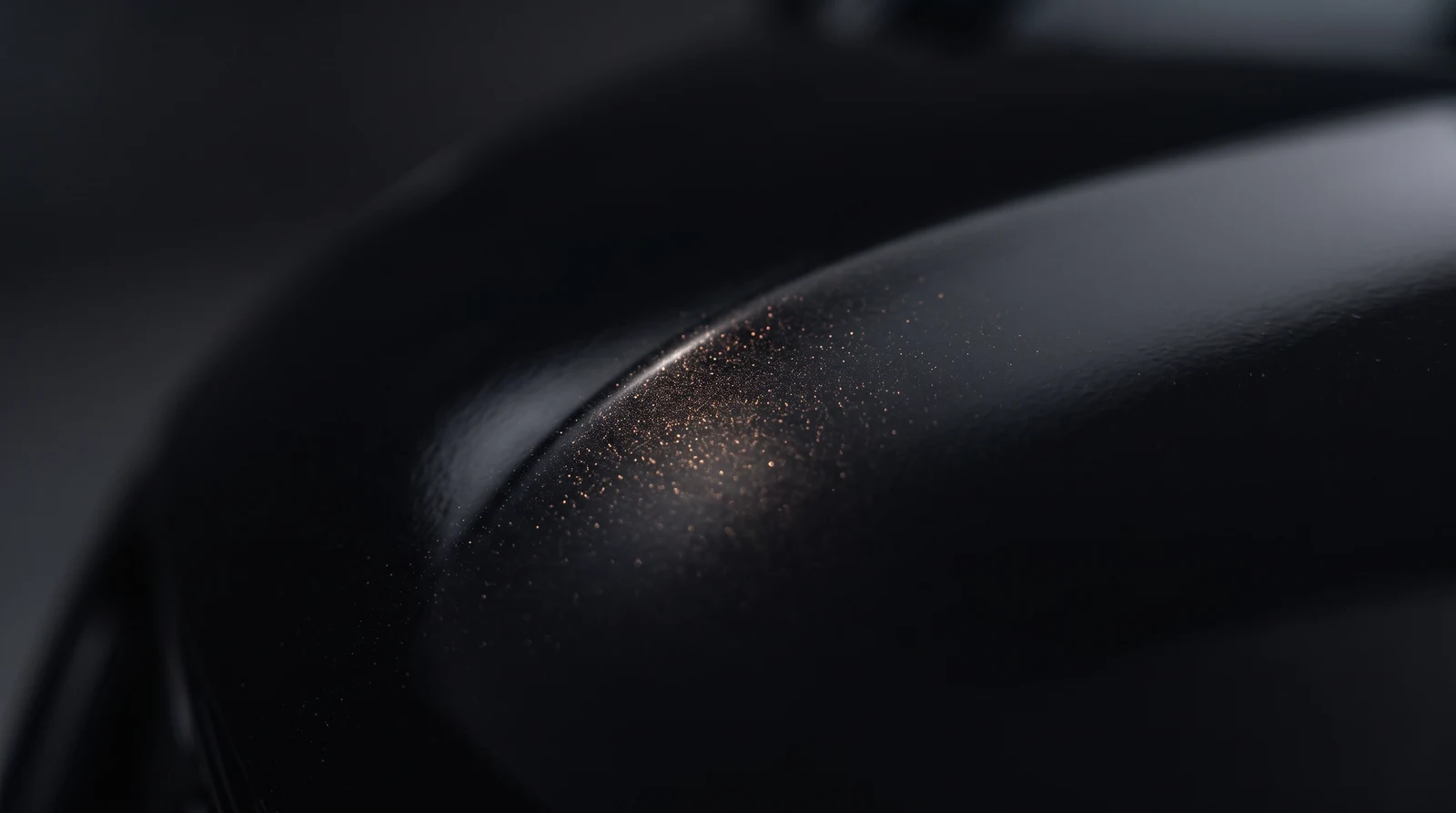
Black Pearl uses mica rather than metal flake in a black base, which produces a subtler, more refined shimmer than a standard metallic black — less of an obvious sparkle, more of a soft glow that shifts gently with viewing angle. It's one of several ways manufacturers add depth to black without going as far as a full tri-coat or candy system.
Where Black Pearl Came From
Pearl technology moved into darker colors once it had been well established in whites and brighter hues, as manufacturers looked for ways to differentiate premium black options from standard solid or metallic black on the same lineup — black being one of the most consistently popular colors across nearly every vehicle segment made this a natural area to invest in refinement.
How Black Pearl Is Applied
Mica pearl particles are blended into a black base coat, then sealed under clear. Because black already absorbs most light, the pearl effect here is more subtle than in a pearl white or pearl blue — it takes direct, angled light to really reveal the shimmer rather than appearing obviously “sparkly” at a glance.
What Black Pearl Looks Like in Different Light
Under direct sun at the right angle, Black Pearl shows a soft, warm-to-cool shimmer moving across the surface. In flat indoor lighting or shade, it can look nearly identical to a solid or standard metallic black, which is part of its appeal for buyers who want a black that reveals more only when they want it to.
Caring for a Black Pearl Finish
Standard pearl-finish care applies: gentle washing and avoiding harsh polishing compounds preserves the even mica distribution. Because the subtlety of the effect depends on an undisturbed clear coat surface, swirl marks can mute the pearl shimmer over time if the car isn't cared for carefully.
Black Pearl vs. Other Finishes
Compared to a standard metallic black, Black Pearl has a smoother, more liquid-looking shimmer rather than a distinct sparkle. Compared to candy black, it's generally less dramatic but also simpler and less expensive to apply and repair, since it doesn't require a separate translucent tint layer.
How Long Black Pearl Lasts
The mica particles themselves don't fade the way a tinted layer can, making Black Pearl comparatively low-maintenance for the depth it adds — normal wear over time shows up mainly as the gradual fine scratching common to any finish, rather than any pearl-specific aging issue.
Which Vehicles Suit Black Pearl Best
This finish suits buyers who want their black car to have a quiet, premium depth without an obviously flashy or sparkly look — a subtle upgrade over solid black rather than a dramatic style statement.
Cost Considerations
Black Pearl typically carries a modest-to-moderate factory upcharge, generally less than a full tri-coat or candy system but more than a solid or standard metallic black, with repair costs following roughly the same pattern.
Common Misconceptions About Black Pearl
Some buyers expect Black Pearl to look dramatically different from solid black in every lighting condition. In practice the two can look very similar indoors or in flat light — the distinction is real but often requires the right light to actually see.
Frequently Asked Questions
Can you see the pearl effect on Black Pearl paint in normal daylight?
It's often subtle in everyday overcast or indirect light. Direct, angled sunlight is where the shimmer becomes clearly visible, which is why this finish can look like plain black in some photos and genuinely dimensional in person.
Is Black Pearl more expensive to repair than metallic black?
Generally a bit more, since matching the mica distribution correctly takes more care than a standard metal-flake metallic, though it's typically less costly than a full candy or tri-coat repair.