On this page
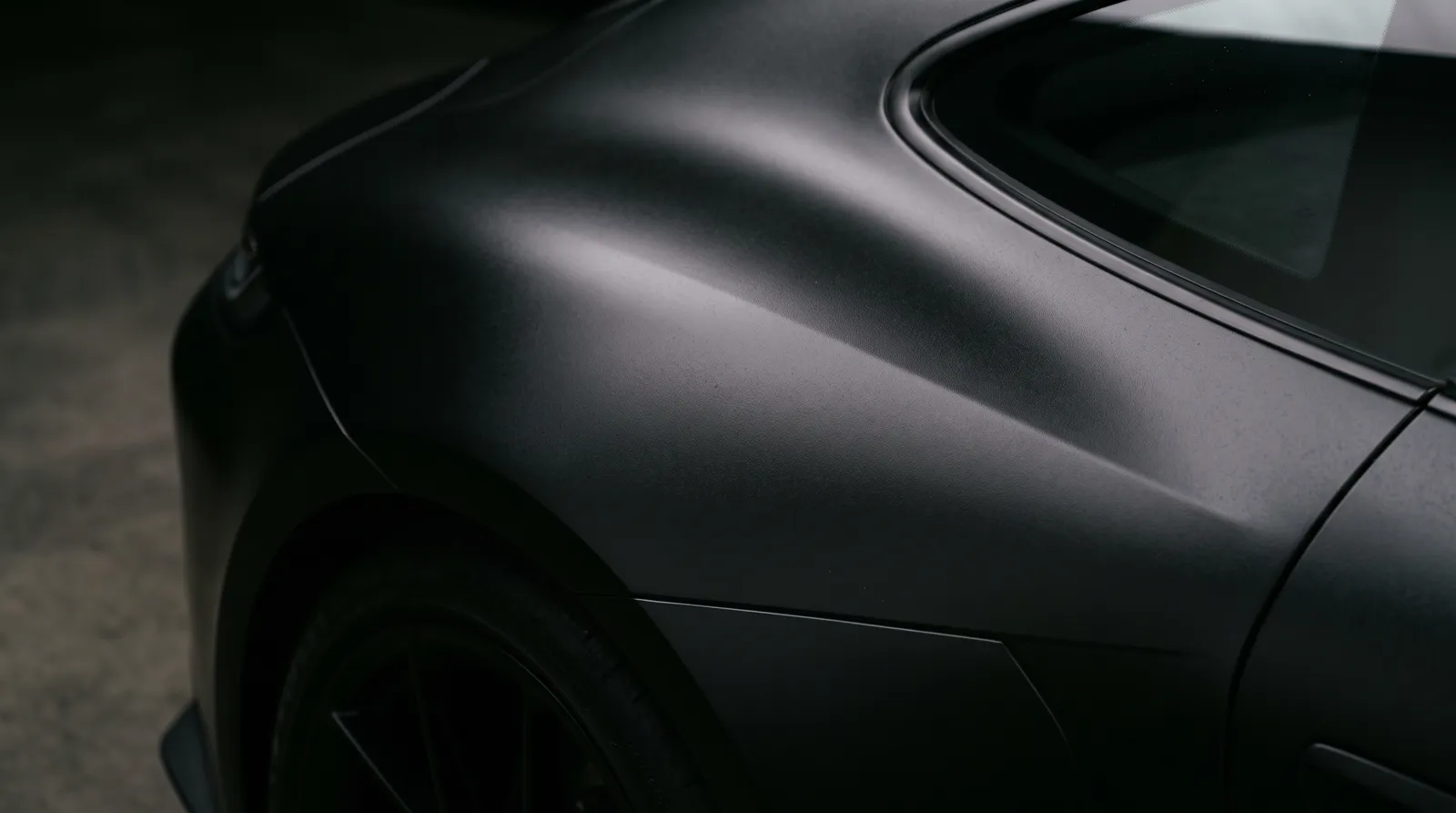
Matte black trades gloss for texture — instead of a reflective, mirror-like surface, matte black is formulated (or clear-coated with a matte-specific product) to scatter light evenly, producing a flat, non-reflective, almost velvety look. It's become one of the most recognizable modern custom and performance finish choices precisely because it looks so different from every other black on the road.
Unlike gloss black, which shows every imperfection in sharp reflected detail, matte black hides surface marks differently — it doesn't reflect them the same way, though it comes with its own distinct set of care requirements that gloss black doesn't have.
It's also worth thinking about this finish in the context of the whole vehicle rather than in isolation — the same finish can read completely differently on a small coupe versus a full-size truck, simply because of how much surface area is available to show off its particular light behavior. Seeing it applied to a similar body style, not just any vehicle, gives a much more accurate sense of how it will look on your own.
Where Matte Black Came From
Matte finishes have roots in both military and industrial applications, where non-reflective surfaces served practical purposes long before becoming a style statement on passenger and performance vehicles. Its adoption as a deliberate automotive style choice grew significantly in custom and performance circles over the past few decades.
How Matte Black Is Applied
Matte black can be achieved either through a matte-formulated paint system or, increasingly commonly, a standard gloss black base with a matte clear coat on top. The matte clear coat approach has become popular because it's more repairable and predictable, using specialized clear coats designed specifically to cure with a flat, non-reflective texture.
Application requires care to keep the matte texture consistent across panels — uneven clear coat thickness can create visible sheen differences that are more noticeable on matte than they would be on a gloss finish.
Ambient conditions during application matter more than most owners realize — temperature, humidity, and even airflow in the booth all affect how evenly a coat lays down and how consistently it cures. This is part of why the same finish can look subtly different between two shops, or even between two jobs at the same shop on different days, and why asking to see recent examples of a painter's work in this specific finish is worth doing before committing.
What Matte Black Looks Like in Different Light
Matte black is one of the more light-stable finishes available — because it doesn't rely on reflectivity, it looks similarly flat and textured whether in bright sun or overcast shade, without the dramatic shine shifts a gloss finish shows.
It's worth checking how this finish reads under artificial lighting too, since showroom halogen or LED lighting, streetlights at night, and your own garage's bulbs can each cast a slightly different color temperature that changes how the finish presents compared to natural daylight. Viewing a physical sample under your own everyday lighting, not just in a showroom, gives the most accurate preview.
Caring for a Matte Black Finish
Matte black has genuinely different care requirements from gloss black, and this trips up a lot of new owners. Standard wax and many polishing compounds are formulated for gloss finishes and can leave a matte surface looking patchy or semi-glossy where applied. Matte-specific care products, hand washing rather than automatic car washes, and avoiding traditional waxing altogether are all part of keeping a matte black finish looking correct.
A simple, consistent routine matters more than any single specialized product: rinse loose dirt before touching the surface to avoid grinding grit into the finish, wash with a dedicated car-wash soap rather than household detergent, and dry with a clean microfiber towel instead of letting water air-dry and spot. Whatever protective product you use, confirm it's specifically rated for this finish type before applying it broadly — a product formulated for gloss can behave very differently on matte or satin.
Matte Black vs. Other Finishes
Compared to gloss black, matte hides fine reflected imperfections but shows fingerprints, water spots, and general grime differently — sometimes more, sometimes less noticeably depending on the specific mark. Compared to satin black, matte is flatter and less reflective; satin sits at a middle point between matte's total flatness and gloss's full shine.
If you're genuinely undecided between two finish types, viewing physical samples side by side in direct sunlight is far more reliable than comparing photos or descriptions — texture and light response are two of the hardest qualities to judge accurately on a screen, and the difference that looks subtle in a photo can be dramatic in person.
Cost is often the deciding factor when two finishes are otherwise equally appealing — it's worth getting quotes for both options on your specific vehicle before committing, since the price gap between finish types can vary more than expected depending on your shop's specific material costs and experience with each technique.
How Long Matte Black Lasts
A quality matte clear coat holds up well to normal driving conditions, though matte finishes are generally considered somewhat more susceptible to visible damage from things like bird droppings, tree sap, or improper cleaning products, since those contaminants can etch or discolor the matte texture in ways that are harder to buff out without affecting the surrounding finish.
Real-world durability also depends heavily on where and how the vehicle is kept — covered or garaged storage, consistent washing, and prompt attention to contaminants like bird droppings or tree sap all extend the practical lifespan of any finish's good looks, regardless of the specific type chosen.
Which Vehicles Suit Matte Black Best
Matte black suits performance and custom-styled vehicles particularly well, and it's become a strong signal of an intentional, modified look rather than a stock factory finish. It's a less natural fit for owners who want the lowest-maintenance option, since matte's specific care requirements are arguably more demanding, not less, than gloss.
Body style matters more than most buyers expect when choosing a finish — flowing, curved panels show off light-reactive finishes like metallic, pearl, and candy more dramatically than flat, boxy panels do, while flatter surfaces can actually suit matte and satin's more uniform, texture-forward look particularly well.
Climate is worth a moment's thought too — finishes with less UV-stable pigments or more delicate textures can ask more of an owner in consistently sunny, high-UV regions than they would in a milder climate, so it's reasonable to factor your local weather into the decision alongside pure aesthetics.
Cost Considerations
Matte black typically costs somewhat more than standard gloss black, both for the specialized clear coat materials and the extra care needed during application — see our cost guide for general finish pricing patterns.
Beyond the finish category itself, the biggest cost factors in any project are the amount of surface prep needed, how many panels are involved, and whether trim and lighting need to be removed for clean, sprayed-in edges. It's worth getting an itemized quote so you can see exactly how much of the total cost is tied to the finish choice specifically versus general prep and labor.
Common Misconceptions About Matte Black
A common misconception is that matte finishes can be waxed like any other paint — standard wax is generally incompatible with matte and can leave visible shiny patches.
Frequently Asked Questions
Can you wax a matte black car?
Standard wax is generally not recommended, as it can create uneven shiny patches on a matte surface. Look for matte-specific care products instead.
Can matte black be polished back to gloss if I change my mind?
If the matte effect comes from a matte clear coat, that clear coat typically needs to be removed and replaced with a standard gloss clear coat — it's a real repaint, not a simple polish.
Does matte black show scratches?
Yes, though differently than gloss — a scratch through the matte clear coat can expose a glossier layer underneath, creating a visible shiny mark against the flat surrounding texture.
Is matte black harder to keep clean than gloss black?
In some ways yes — it can't be waxed conventionally and is more sensitive to certain contaminants, though it doesn't show fine swirl marks the way gloss black does.
Can I get matte black touch-up paint that matches?
Touch-up work on matte finishes is more specialized than standard paint touch-up — it's worth having it done by a shop experienced specifically with matte clear coats rather than a generic touch-up product.
Does matte black affect insurance or resale differently than a standard finish?
Finish type doesn't affect insurance rates, and its resale impact is generally minor compared to the underlying color choice and the vehicle's overall condition.
Can matte black be applied by most body shops, or does it need a specialist?
Many general body shops can handle it competently, though for more involved finishes it's worth specifically asking about the shop's experience with this finish type before committing.
How do I know if my vehicle already has matte black?
Check your factory paint or trim code, typically on a door jamb sticker, or look closely at the panel in direct sunlight for the specific texture and light behavior this finish produces.
Is matte black a good choice for a vehicle I plan to sell in a few years?
It's generally fine — finish type has a modest effect on resale compared to color choice and overall vehicle condition, though very niche or high-maintenance finishes can narrow your buyer pool slightly.
Can I mix matte black with a different finish on the same vehicle?
Yes, two-tone and multi-finish combinations (for example, a gloss body with a matte hood or roof) are increasingly common and can be planned deliberately with your painter.
Does matte black need any special preparation before a wrap can be applied over it?
If you're considering a vinyl wrap over this finish later, mention that to your painter upfront — surface texture and gloss level both affect how well a wrap adheres and how it will look.