On this page
A paint chip is a small area where the paint (and sometimes the primer underneath) has been knocked away down to bare metal or plastic, almost always from an impact rather than gradual wear — a kicked-up rock on the highway, a shopping cart in a parking lot, a stray branch. Left alone, a chip is more than cosmetic: exposed metal can start rusting within weeks in the wrong conditions, turning a small repair into a much bigger one.
Most chips are genuinely small, under a quarter-inch across, which is exactly the size range where a careful DIY touch-up or a quick professional spot repair can look essentially invisible once done. The key variable isn't the chip's size so much as whether it's caught early, before rust or dirt gets into the exposed area.
What Causes This
Highway driving is the single biggest contributor — tires kick up gravel and debris at speed, and even small stones hit with enough force to punch through clear coat and base coat down to bare metal, especially on the front bumper, hood, and lower fenders. Parking lots contribute their own share through shopping carts, adjacent car doors, and low-speed contact with curbs or bollards.
Age plays a role too: clear coat becomes more brittle over years of UV exposure, making older paint somewhat more prone to chipping from the same impact that a newer, more flexible clear coat might have shrugged off.
Signs to Look For
Beyond the obvious visual gap in the paint, watch for a rough texture when you run a fingernail lightly over the area, any hint of orange or brown discoloration around the edges (an early sign rust has already started), and whether the chip has a clean edge or a spreading, flaking border — spreading edges suggest the surrounding clear coat is already lifting and the damage may be larger than it first appears.
DIY vs. Professional Repair
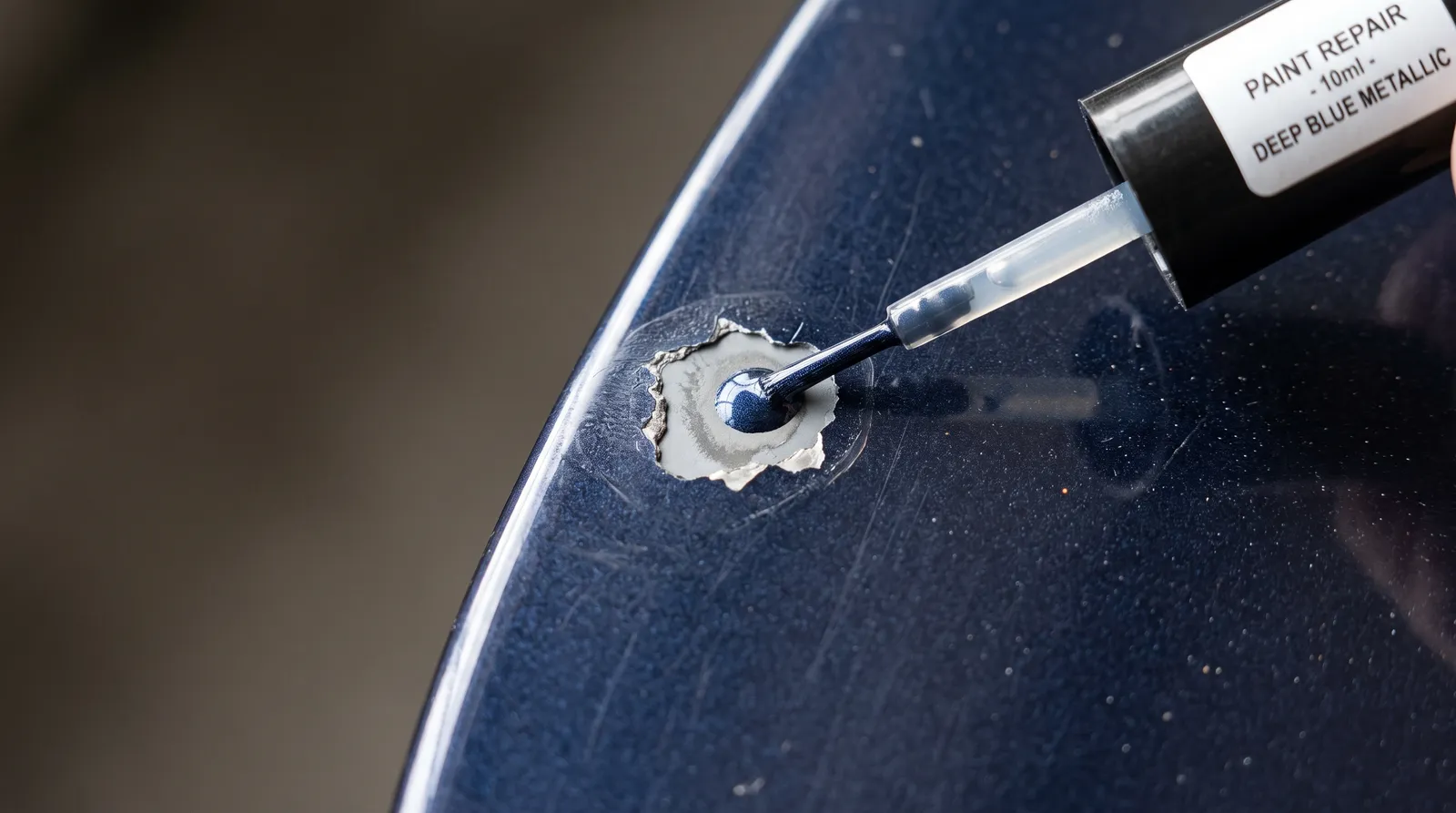
A single small chip, caught early and touched up carefully with a matched touch-up pen or bottle, is a realistic DIY job — clean the area, apply thin layers of touch-up paint, let it cure, and in many cases a light clear coat pen on top for protection. It won't be invisible up close, but from a normal viewing distance it will read as a minor, acceptable blemish rather than an eyesore.
Multiple chips, chips larger than a small dot, or chips where rust has already started are better handled by a professional, since proper rust treatment and a sprayed (rather than dabbed) repair genuinely look different and hold up longer. A professional can also blend the repair into the surrounding clear coat in a way a touch-up pen physically can't.
How the Repair Process Works
A professional chip repair typically starts with cleaning and assessing the damage, sanding the chip's edges smooth so the new paint has something to key into, and treating any rust if it's present. Primer goes into the bare spot first, followed by color-matched base coat built up in thin layers, then clear coat blended out into the surrounding factory finish and polished to match the surrounding gloss.
For a DIY approach, the steps are similar in principle but simplified: clean thoroughly, apply a small dab of primer if bare metal is showing, then multiple thin coats of matched touch-up paint allowed to dry between applications, finished with a clear coat pen once the color has fully cured.
Temperature and humidity during application matter more than most people expect — touch-up paint and clear coat cure best within a moderate temperature range with low humidity; painting in direct hot sun or in damp conditions can lead to a cloudy or uneven finish even when the technique itself was correct.
Tools & Materials
A basic DIY chip repair kit needs matched touch-up paint (bottle or pen), a fine-grit sanding pad or block for prepping the edges, isopropyl alcohol or a dedicated surface prep spray for cleaning, and a clear coat pen for the final protective layer. For rust treatment specifically, a small rust converter product is worth having on hand if the chip has been exposed long enough to show any discoloration.
Cost Factors
A single small chip touched up professionally is one of the least expensive paint repairs available, often priced per chip or as a small flat fee for a handful of chips in the same area. Cost climbs with the number of chips, their size, whether rust treatment is needed, and whether the repair needs to be sprayed and blended versus simply dabbed and filled.
DIY touch-up materials (a matched pen or small bottle plus a clear coat pen) cost a small fraction of a professional repair, though the finished result is typically visible on close inspection in a way a professional spray repair generally isn't.
Prevention
Paint protection film on high-impact areas — the front bumper, hood leading edge, mirror caps, and lower rocker panels — is the most effective preventive measure, physically absorbing impacts that would otherwise chip bare paint. Maintaining a safe following distance on the highway reduces exposure to debris kicked up by the vehicle ahead.
Regular inspection matters too: catching a chip within days rather than months means treating it before any rust has a chance to start, which is a meaningfully easier and cheaper repair.
It's also worth checking your vehicle periodically after a long highway trip specifically, since that's when new chips are most likely to appear — a quick walk-around inspection takes a minute and catches new damage while it's still easiest to treat.
Common Mistakes
The most common mistake is leaving a chip untreated because it "looks too small to matter" — rust doesn't care how small the exposed metal is, and a chip that would have taken ten minutes to touch up can turn into a repair requiring rust removal and repainting if ignored for months in a humid or salted-road climate.
Another common mistake is applying touch-up paint too thickly in one go rather than several thin coats, which leads to a raised, obviously-different-textured spot that draws more attention than the original chip did.
Frequently Asked Questions
How urgent is it to fix a paint chip?
Within a few weeks is a reasonable target, especially in humid or road-salt climates where exposed metal can start rusting quickly. It's not an emergency, but it's not something to leave indefinitely either.
Can a paint chip be completely invisible after repair?
A professional, sprayed and blended repair can come extremely close to invisible under normal viewing conditions. A DIY touch-up pen repair is generally visible on close inspection, even when done carefully.
Does a small chip affect a vehicle's resale value?
A single small, well-repaired chip has minimal impact on resale value. Multiple untreated chips, or chips that have progressed to visible rust, can affect both appearance and value more meaningfully.
What's the difference between a chip and a scratch?
A chip is a small area where paint has been knocked away entirely, typically from an impact, while a scratch is a linear mark where paint has been scraped rather than removed in a small spot — the repair approach differs accordingly.
Can I use nail polish or another substitute for touch-up paint?
It's not recommended — automotive touch-up paint is formulated to match your specific factory color and to bond properly with clear coat and base coat layers, which household products aren't designed to do.
How many chips justify a professional repair over DIY?
There's no strict number, but once you're dealing with several chips in the same general area, or any chip larger than a small dot, professional spraying and blending typically gives a meaningfully better result than repeated touch-up pen applications.
Does weather affect how urgently I should fix a chip?
Yes — humid or coastal climates with salt exposure accelerate rust formation significantly, making prompt repair more time-sensitive than it would be in a dry climate.
Can a chip repair be covered by touch-up insurance or a dealer warranty?
Some new-vehicle warranties or paid protection plans cover paint chip repair; check your specific coverage, as this varies widely between manufacturers and dealers.
Do chip guards or bras actually help?
Front-end bras and similar covers can help on road trips or highway-heavy driving, though paint protection film offers more complete, less visually obtrusive, and more permanent coverage for daily use.
Can chip repair be done at home without any prior experience?
Yes, for a single small chip — the process is straightforward enough for a careful first-timer, though results improve with practice and patience.
Does location affect the price?
Yes — labor rates and material costs vary meaningfully by region, so the same job can price differently between a major metro area and a smaller local market. Get quotes locally rather than relying on a national average.