On this page
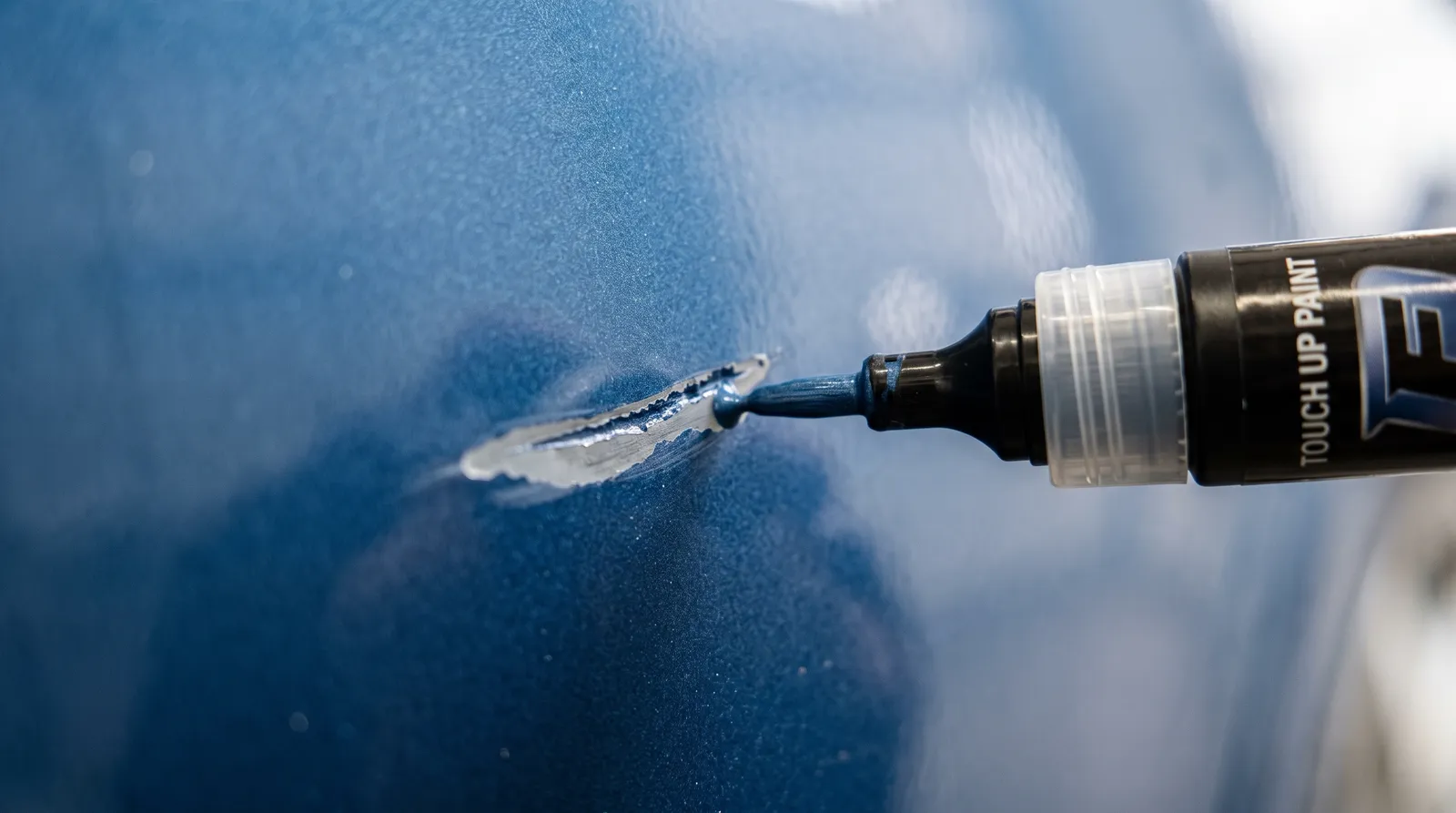
Touch-up paint is small-batch, precisely color-matched paint intended for spot repairs — chips, small scratches, minor scuffs — rather than full panel work. It's sold in a few common formats: a small bottle with a brush applicator, a pen-style applicator for finer control, and aerosol cans for slightly larger areas.
The single most important factor in touch-up paint is an accurate color match, which depends entirely on using your vehicle's correct factory paint code rather than guessing from a color name or a general chart.
What Causes This
The need for touch-up paint almost always traces back to the same sources as chip damage generally: road debris, parking lot contact, minor scrapes against stationary objects, and general wear on high-contact areas like door edges and handles.
Touch-up paint is also commonly used proactively, applied to a chip the moment it's noticed, specifically to prevent the exposed area from progressing to rust before a more thorough repair (if ever needed) can be scheduled.
Signs to Look For
A touch-up job gone right is genuinely hard to spot from normal viewing distance and shows a smooth, even surface with no visible ridge at the repair's edge. Signs of a rushed or poorly executed touch-up include a raised, bump-like texture, a visible color mismatch once the paint fully cures (touch-up paint can shift slightly in hue as it dries), and a glossy patch that doesn't quite match the surrounding sheen level.
DIY vs. Professional Repair
Touch-up paint is inherently a DIY-friendly product — that's its whole purpose, letting owners address small chips and scratches without a full shop visit. The results are good for their purpose: they stop rust and restore reasonable color coverage, though they're generally visible on close inspection since a dabbed or brushed repair has a different texture and edge than a sprayed one.
For a repair where invisibility matters more than convenience, a professional spot repair with proper spraying and blending will outperform even a carefully applied touch-up pen, since the professional process can feather the edges into the surrounding factory paint in a way manual application can't replicate.
How the Repair Process Works
Proper touch-up application starts with cleaning the area thoroughly and, if needed, light sanding to smooth any rough edges around the chip. A small amount of primer goes down first if bare metal is exposed, then thin layers of matched touch-up paint are built up gradually, allowing each layer to dry before adding the next — this is the single biggest factor separating a good touch-up job from an obviously raised, blobby one.
Once the color has fully cured (often 24-48 hours), a clear coat pen or product can be applied over the repair for UV protection and a closer gloss match to the surrounding finish.
Letting each coat dry fully before the next — typically 10 to 20 minutes for touch-up paint, though check your specific product's instructions — is the single technique most likely to separate a smooth, low-visibility repair from an obvious, textured one.
Tools & Materials
Beyond the touch-up paint itself, a complete kit benefits from a fine detail brush (many bottles include one, but a separate fine-tip brush gives more control), 1500-2000 grit wet sanding paper for leveling a repair once fully cured, and a rubbing compound plus polish for blending the repaired area's gloss into the surrounding factory finish.
Cost Factors
A single bottle or pen of accurately matched touch-up paint is one of the least expensive automotive products available, typically covering many small repairs over its usable life. Cost scales primarily with how the paint is sourced — OEM dealer-matched paint tends to cost more than a generic aftermarket color-matched equivalent, though accuracy can vary between suppliers.
The real cost consideration with touch-up paint is less about the product itself and more about the tradeoff against a professional spot repair — touch-up paint is far cheaper per application but yields a visibly different result than professional spraying.
Prevention
Keeping a small touch-up kit matched to your specific factory code on hand means new chips can be addressed within days rather than months, which is the single most effective way to prevent rust from ever becoming a factor.
Paint protection film on high-impact areas reduces how often touch-up paint is needed in the first place by physically absorbing minor impacts before they reach the factory paint at all.
Store touch-up paint in a cool, dark place away from temperature extremes to maximize its usable shelf life, and give the bottle or pen a thorough shake or stir before each use to redistribute any settled pigment.
Common Mistakes
The most common mistake is ordering touch-up paint by color name rather than factory paint code — "red" or "silver" isn't precise enough, and an inaccurately matched touch-up will be more visually obvious than the original chip it was meant to fix.
Another common mistake is applying too much paint in a single thick coat rather than several thin ones, which creates a raised, glossy spot that catches light differently than the surrounding factory finish and draws the eye rather than blending in.
A third common mistake is not testing the touch-up color on an inconspicuous spot first, particularly with older paint that may have faded from its original factory shade, where a technically correct code can still look slightly off against sun-faded surrounding paint.
Frequently Asked Questions
How do I find the right touch-up paint for my car?
Start with your factory paint code, found on your door jamb sticker or decoded from your VIN — see our color code lookup tool. Order touch-up paint specifically matched to that code, not just a general color name.
Does touch-up paint need a clear coat on top?
For the best UV protection and closest gloss match to factory paint, yes — most touch-up kits include or offer a separate clear coat pen for this purpose.
How long does touch-up paint last before it needs replacing?
A properly sealed bottle or pen typically stays usable for one to two years, though checking consistency and color before using older touch-up paint is a good practice.
Can touch-up paint be used on plastic bumpers?
Many touch-up products work on both metal and properly primed plastic, though flexible plastic bumpers may need a flex additive mixed in for the paint to hold up to the material's flexing without cracking.
Is OEM touch-up paint better than aftermarket?
OEM paint from a dealer is formulated to the exact original specification, generally offering the most reliable match, though quality aftermarket suppliers using your VIN or paint code can also achieve very accurate results.
Why does my touch-up repair look shiny or raised compared to the rest of the panel?
This usually means too much paint was applied in too few coats — thin, multiple layers with drying time between them, followed by careful clear coat and light polishing, gives a much flatter, less obvious result.
Can touch-up paint be mixed to match a color that's not in a standard database?
Yes, an experienced supplier or shop can custom-mix touch-up paint to match a physical sample even if your specific shade isn't in their standard database.
Does the touch-up paint bottle's brush work as well as a pen applicator?
Both can work well; pens generally offer finer control for small chips, while brush-in-cap bottles can cover slightly larger areas more efficiently — it's largely a matter of the size and shape of what you're repairing.
Can I speed up touch-up paint curing with a hair dryer or heat gun?
Gentle, low, indirect heat can help in cool conditions, but excessive or direct heat risks bubbling or discoloring the fresh paint — patience and proper ambient conditions are generally the safer approach.
Can touch-up paint be applied over an existing touch-up that's peeling?
No, remove the failing existing touch-up first (light sanding) rather than applying new paint over a compromised layer, which will likely fail the same way.
Does location affect the price?
Yes — labor rates and material costs vary meaningfully by region, so the same job can price differently between a major metro area and a smaller local market. Get quotes locally rather than relying on a national average.
Is it normal for touch-up paint to look slightly different right after application?
Yes, fresh paint often looks slightly duller or different until it fully cures over the following days, at which point the true color and gloss become apparent.