On this page
Primer is the foundational layer between bare metal or plastic and the visible paint above it, and skipping it — or using the wrong type — is one of the most common reasons a DIY or budget paint job fails early. It does three jobs at once: it helps paint adhere to the surface, it seals and protects bare metal from corrosion, and it fills minor surface imperfections so the finish coat goes on smooth.
Automotive primer isn't one single product; different primer types are formulated for different substrates and different stages of surface preparation, and using the right one for your specific situation matters more than most people expect for how well the final paint holds up.
How It Works
Primer works through a combination of mechanical and chemical adhesion — it's formulated to bond more effectively to bare or sanded surfaces than color coat paint would on its own, creating a stable base layer for everything applied afterward. Many primers also contain corrosion inhibitors that actively protect bare metal from oxidation while the vehicle is between prep and final paint.
Some primers, particularly high-build and filler primers, are also formulated to be sanded once cured, allowing minor surface imperfections to be leveled out before color goes on, which is part of why proper primer work makes such a visible difference in the final paint's smoothness.
Types & Options
Etch primer (sometimes called self-etching primer) is formulated for bare metal, using a mild acid component that chemically etches the surface for maximum adhesion — it's the right choice when you're down to raw metal with no existing paint or primer layer. Epoxy primer offers excellent adhesion and corrosion resistance and works over a wider range of substrates, often used as a versatile all-purpose choice or as a sealer coat.
High-build or filler primer is thicker and specifically designed to be sanded, filling minor imperfections and creating a smooth, level surface for color coat. Primer-sealer is a final primer layer applied just before color coat, providing uniform color coat adhesion and preventing any underlying primer or repair work from showing through or affecting the final color's appearance.
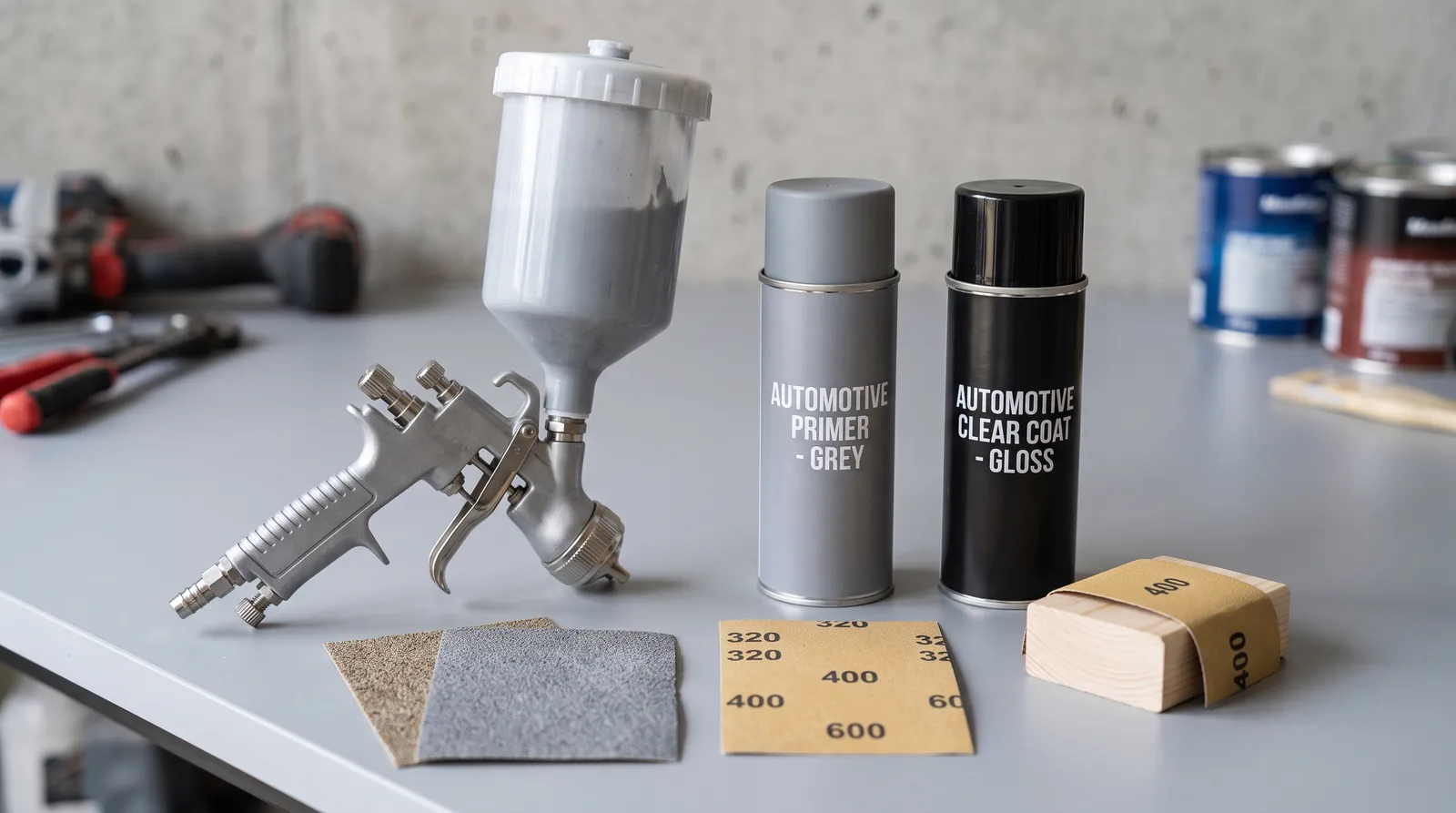
Spray can (aerosol) primer is convenient for small DIY jobs and touch-ups, while gun-applied primer from a mixed can gives more control and even coverage for larger areas — both use similar underlying chemistry, differing mainly in application method and convenience.
How to Use It / Do It Right
Start by identifying your surface: bare metal needs etch or epoxy primer, while a surface with minor imperfections needing leveling calls for high-build primer, and any primer layer should typically be finished with a primer-sealer before color goes on. Apply in thin, even coats using a spray gun for professional results, or quality primer spray cans for smaller DIY areas, allowing proper flash and cure time between coats per the product's specific instructions.
Once cured, high-build and filler primers are typically wet-sanded with progressively finer grit sandpaper to achieve a smooth, level surface before moving to color coat — skipping or rushing this sanding step is one of the most common causes of a visibly imperfect final paint job.
Temperature and humidity affect primer just as much as color coat — most primers have a recommended application temperature range, and spraying outside that range can lead to poor flow, slow cure, or an uneven texture that shows through subsequent layers.
Common Mistakes
The most common mistake is using the wrong primer type for the substrate — applying a standard primer over bare metal without proper etching or corrosion protection invites future rust underneath paint that looks fine on the surface. Another common mistake is applying primer too thick in one pass, which can lead to solvent trapping, cracking, or an uneven surface that telegraphs through the finish coat.
Skipping adequate cure and flash time between primer coats, or between primer and color coat, is another frequent issue — rushing this process can trap solvents and cause finish problems (bubbling, poor adhesion) that only become apparent after the job is otherwise complete.
Safety Considerations
Etch primers contain acidic components and some primers release solvent fumes that require adequate ventilation and a properly rated respirator, not just a dust mask, for safe use — read and follow the specific product's safety data sheet before working with any primer indoors or in an enclosed space.
DIY vs. Professional
Priming a small area or single panel is genuinely approachable for a careful DIYer with the right products and some patience for proper technique and cure times. Priming an entire vehicle, or working with etch primer on extensive bare metal repair, benefits from professional spray equipment and experience, both for consistent application and for properly managing the health and safety considerations of some primer chemicals in a non-ventilated space.
If you're unsure which primer type your specific repair needs, a professional consultation — even if you plan to do some of the work yourself — can save real money by avoiding a redo caused by using the wrong product for your substrate.
A Practical Tip
A practical way to think about primer selection: if you can see bare metal, you need etch or epoxy primer first; if the surface has minor imperfections but no bare metal, high-build primer alone may be sufficient; and virtually any primer job benefits from a final primer-sealer coat immediately before color for the most consistent result.
Cost Considerations
Primer itself is one of the less expensive components of any paint project, whether DIY (a can of quality primer costs a modest amount) or professional (primer materials are a small fraction of a typical repair or repaint quote). The real cost consideration is the labor and time involved in proper surface prep and sanding, which affects the overall project cost far more than the primer product itself.
See our full cost guide for how primer and prep work fits into overall paint job and repair pricing.
Frequently Asked Questions
Do I always need primer before painting a car?
Yes, in almost every situation — primer provides adhesion and, for bare metal, corrosion protection that color coat paint alone doesn't reliably provide, and skipping it significantly increases the risk of paint failure or rust.
How many coats of primer does a repair typically need?
It depends on the substrate and condition, but two to three thin coats is a common range for most repairs, allowing proper flash time between each and finishing with a sealer coat before color.
Can I use the same primer for plastic bumpers and metal panels?
Not always — plastic substrates often need a specific plastic-compatible primer or an adhesion promoter, since standard metal primers don't always bond well to flexible plastic surfaces.
How long does primer need to cure before painting over it?
This varies significantly by specific product, ranging from under an hour to overnight — always check your specific primer's technical data sheet rather than assuming a general timeframe.
What happens if I paint over primer that hasn't fully cured?
Solvents from the color coat can react with uncured primer, potentially causing lifting, wrinkling, or poor adhesion that may not be fully apparent until well after the job is finished.
Is epoxy primer better than etch primer?
They serve somewhat different purposes — etch primer is specifically for bare metal adhesion, while epoxy offers broader substrate compatibility and strong corrosion resistance; many professional jobs use both in sequence rather than choosing one over the other.
Can primer be left exposed without color coat for a while?
Most primers offer some UV protection short-term, but they're not designed for extended outdoor exposure — check your specific product's guidance, and plan to apply color coat within the recommended window.
Does primer color matter for the final paint color?
Yes, to some degree — using a primer color close to your final color (gray for most colors, or a specifically tinted primer) can improve coverage and true color accuracy, especially for lighter or more translucent final colors.
Can I spray primer over old paint instead of bare metal?
Yes, sanding/scuffing old paint to create adhesion is often sufficient without going to bare metal, as long as the existing paint is sound and not peeling or contaminated.
Does primer come in different colors?
Yes, gray is most common as a neutral base, though white and black-tinted primers exist to help true color coats (especially lighter or more translucent ones) achieve accurate final color over fewer coats.
Does location affect the price?
Yes — labor rates and material costs vary meaningfully by region, so the same job can price differently between a major metro area and a smaller local market. Get quotes locally rather than relying on a national average.