On this page
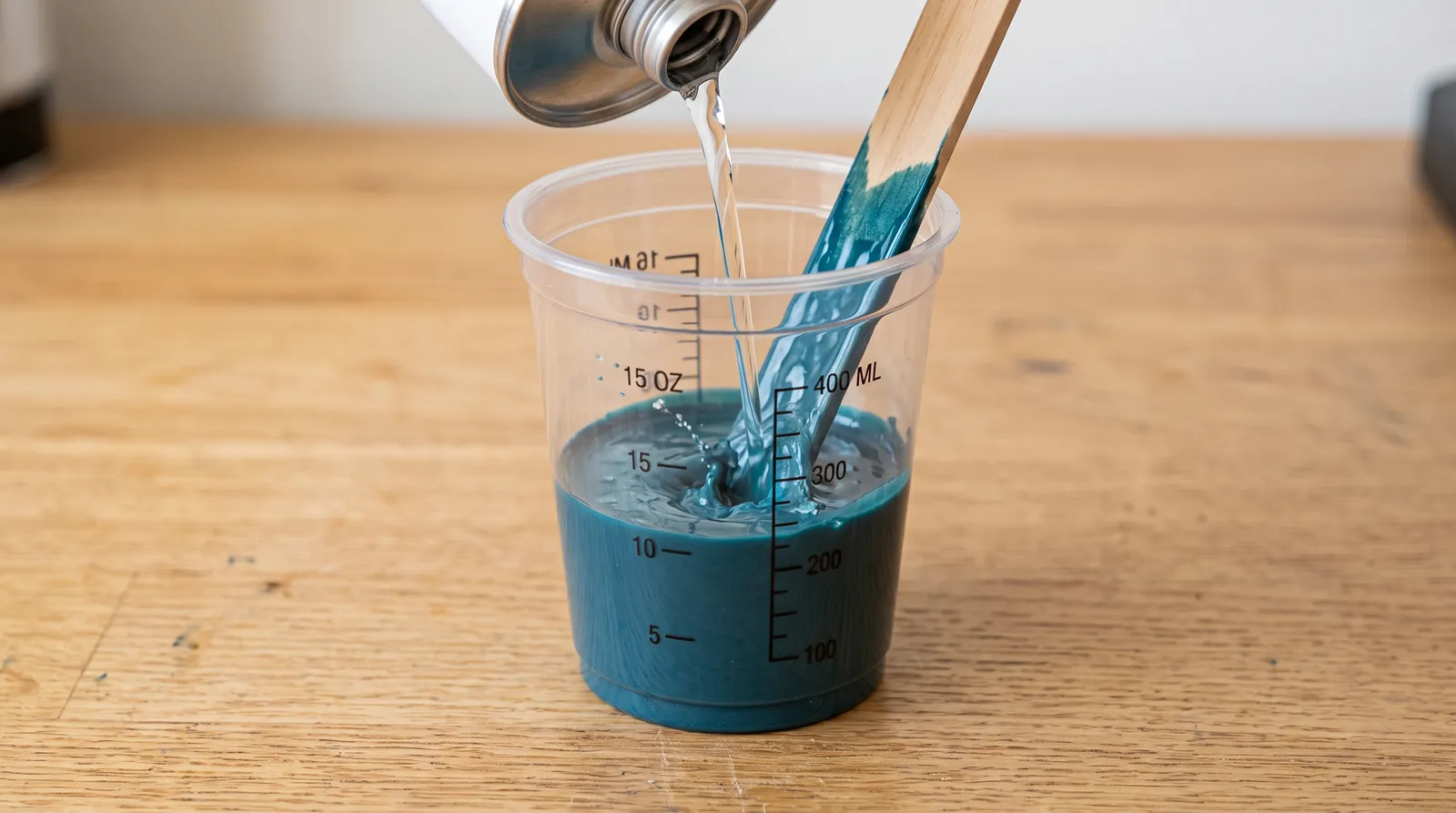
Paint reducer is a solvent added to paint before application to thin it to the proper viscosity for spraying — paint straight from the can or mixing cup is typically too thick to atomize properly through a spray gun, and reducer brings it to a workable consistency.
Getting the reduction ratio right matters more than many DIYers expect: too thick and the paint won't atomize properly, leading to a textured, uneven finish; too thin and you risk runs, poor coverage, and a weaker final film.
Take reducer selection seriously even on a small project — it genuinely affects your final result more than its low relative cost might suggest.
How It Works
Reducer works by chemically thinning the paint's viscosity, allowing it to flow properly through a spray gun's nozzle and atomize into the fine mist needed for even coverage. Different reducers are formulated with different evaporation rates — fast, medium, and slow — selected based on ambient temperature and the specific job, since evaporation rate affects how the paint flows, levels, and cures.
Reducer isn't interchangeable across all paint types; urethane, acrylic, and other paint chemistries typically require reducers specifically formulated for that paint system to ensure proper chemical compatibility and cure characteristics.
Types & Options
Fast reducers evaporate quickly, useful in cooler conditions or for faster turnaround, but can cause issues (poor flow-out, orange peel texture) if used in hot weather where they evaporate before the paint has a chance to level properly. Slow reducers evaporate more gradually, better suited to hot weather, allowing paint more time to flow and level before curing, though using a slow reducer in cold conditions can lead to sagging or extended cure times.
Medium reducers split the difference and are a common default choice for moderate ambient conditions where neither extreme fast nor slow evaporation is specifically needed.
Some manufacturers offer a single "universal" reducer marketed for use across their full product line, while others require matching reducer specifically to each individual paint product — always check compatibility rather than assuming universality.
How to Use It / Do It Right
Follow the paint manufacturer's specific mixing ratio recommendations (often expressed as a ratio like 4:1:1 for paint:reducer:hardener) rather than guessing, since these ratios are formulated for that specific product's chemistry and intended results. Select reducer speed (fast, medium, slow) based on the day's actual ambient temperature at time of spraying, not just general assumptions.
Mix thoroughly and consistently, and be aware that reduced, sprayable paint has a limited working time (pot life) before it becomes too thick or begins curing in the mixing container — mix only what you can use within that window.
Keep your mixing cups and stir sticks clean and dedicated to avoid cross-contamination between different paint chemistries, since even small amounts of incompatible product residue can affect a new batch's cure or finish quality.
Label your mixed batches with the ratio and time mixed if you're stepping away between coats, since it's easy to lose track of pot life when a project spans several hours.
Common Mistakes
Using the wrong reducer speed for ambient conditions is one of the most common mistakes, leading to orange peel texture (fast reducer in hot weather) or runs and extended cure times (slow reducer in cold weather). Eyeballing mixing ratios rather than measuring accurately is another frequent issue, since even modest deviations from the recommended ratio can noticeably affect spray characteristics and final finish quality.
Using a reducer not specifically formulated for your paint system's chemistry can cause compatibility issues, from poor flow to adhesion or curing problems that may not be apparent until well after application.
Finally, storing opened reducer containers loosely sealed lets solvent evaporate over time, gradually changing the product's effective concentration for your next project.
Safety Considerations
Reducers are solvents with their own health and flammability considerations — work in a well-ventilated area away from open flames or sparks, and use appropriate respiratory protection when mixing and spraying reduced paint.
DIY vs. Professional
Understanding and correctly applying reducer ratios is one of the more technical aspects of spray painting that benefits from either professional application or, for DIYers, careful study of the specific product's technical data sheet rather than guesswork.
Many DIY-oriented aerosol products come pre-reduced to an appropriate spray viscosity, avoiding this step entirely, which is part of why spray cans are more forgiving for beginners than mixing and spraying paint through a gun.
If you're new to spray painting generally, practicing your mixing and spraying technique on inexpensive scrap material before committing to your actual project panel is a low-risk way to build confidence with a new reducer or paint system.
A Practical Tip
Keep a simple log of what ratios and reducer speeds worked well for you in different conditions if you're doing DIY spray work regularly — ambient conditions vary enough between projects that your own notes often prove more useful than generic guidance alone.
Cost Considerations
Reducer is a relatively inexpensive component of overall paint material costs, though using the wrong type or ratio can lead to a failed application that wastes the more expensive paint itself, making correct reducer use a cost-saving practice as much as a quality one.
See our cost guide for how materials generally factor into overall project pricing.
Buying reducer in the size that matches your project's scope, rather than a much larger container than needed, helps avoid product degrading in storage before you use it all.
Buying a mid-size container rather than the smallest option often works out cheaper per ounce for anything beyond a single small touch-up, as long as you have a way to store the remainder properly sealed for a future project.
Frequently Asked Questions
What happens if I use too much reducer?
Over-reduced paint sprays too thin, leading to poor coverage, an increased risk of runs, and a weaker final paint film that may not provide adequate protection or color depth.
Can I use paint thinner instead of automotive reducer?
No, general paint thinner isn't formulated for automotive paint chemistry and can cause serious compatibility issues — always use a reducer specifically designed for your paint system.
How do I choose between fast, medium, and slow reducer?
Base your choice on the ambient temperature at the time of spraying — check your specific paint manufacturer's recommended temperature ranges for each reducer speed option.
Does reducer affect the final color of the paint?
Properly used, reducer shouldn't meaningfully affect final color, though incorrect mixing ratios can affect how evenly pigment (especially metallic flake) distributes during application.
Is reducer the same as thinner or hardener?
No, these are distinct products — reducer thins paint for sprayability, hardener (used with 2K products) triggers a chemical curing reaction, and general thinner is a different, non-automotive-specific solvent.
How long does mixed, reduced paint stay usable?
This varies by product but is often just a few hours (called pot life) — check your specific paint's technical data sheet and plan to use mixed paint within that window.
Can I reuse leftover mixed, reduced paint the next day?
Generally no for activated (hardener-mixed) products, since they cure within their pot life regardless of whether they're used — mix only what you'll use in one session.
Does altitude affect reducer choice?
Yes, higher altitudes can affect evaporation rates — check whether your specific paint manufacturer has altitude-specific guidance if you're working well above sea level.
Does every paint job need a hardener as well as reducer?
Only 2K (two-component) systems require a hardener; older single-component (1K) products use reducer alone without a separate curing agent.
Can I mix reducer by eye instead of measuring?
Measuring accurately with proper mixing cups is strongly recommended over eyeballing, since incorrect ratios are a common cause of spray and cure problems.
Does location affect the price?
Yes — labor rates and material costs vary meaningfully by region, so the same job can price differently between a major metro area and a smaller local market. Get quotes locally rather than relying on a national average.
Can leftover unreduced paint be stored for later use?
Unmixed base paint generally stores longer than activated, reduced paint — check your specific product's guidance, and always reseal containers tightly to prevent evaporation and contamination.